Showing posts with label restore. Show all posts

Sunday, November 29, 2020

Awake to Restoration


The texts from the Roman Catholic Lectionary for the beginning of the Liturgical Year invite us to focus on our relationship with Christ today and in the future.
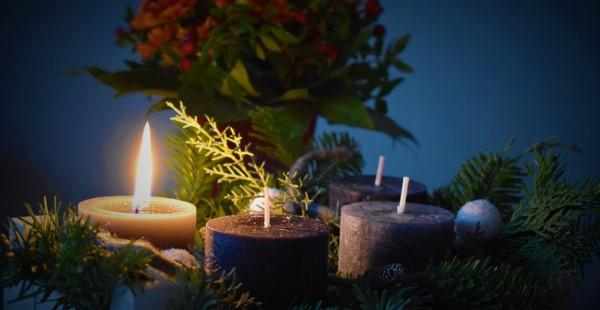
Photo by Waldemar Brandt on Unsplash


The reading from the Book of the Prophet Isaiah asserts that we are all the work of God’s hand.


* [63:19–64:3] A new theophany, like Sinai of old, is invoked so that Israel’s enemies will be humbled by God’s intervention.1

Psalm 80 is a prayer for Israel’s restoration.


* [Psalm 80] A community lament in time of military defeat. Using the familiar image of Israel as a vineyard, the people complain that God has broken down the wall protecting the once splendid vine brought from Egypt (Ps 80:9–14). They pray that God will again turn to them and use the Davidic king to lead them to victory (Ps 80:15–19).2

The reading from the First Letter of Paul to the Corinthians reminds us that we are called into the fellowship of his Son, Jesus Christ our Lord.


* [1:1–9] Paul follows the conventional form for the opening of a Hellenistic letter (cf. Rom 1:1–7), but expands the opening with details carefully chosen to remind the readers of their situation and to suggest some of the issues the letter will discuss.3

In the Gospel of Mark, Jesus urges the need for our watchfulness and keeping awake.


* [13:3–37] Jesus’ prediction of the destruction of the temple (Mk 13:2) provoked questions that the four named disciples put to him in private regarding the time and the sign when all these things are about to come to an end (Mk 13:3–4)... No one but the Father knows the precise time, or that of the parousia (Mk 13:32); hence the necessity of constant vigilance (Mk 13:33–37). Luke sets the parousia at a later date, after “the time of the Gentiles” (Lk 21:24). See also notes on Mt 24:1–25:46.4

Barbara Dilly explores that Isaiah acknowledges that God is our father and our redeemer, but he is anxious about how God works in our hearts.  Is it God that lets us wander from God’s ways?  Is it God who hardens our hearts?  Has God left us to our own devices and then become angry with us… While Christ Jesus changed our relationship with God, we are still flawed human beings.  He tells us clearly that we need to keep watch over our faith.  Advent is a perfect time to practice our vigilance.  We are not just awaiting the coming of the Savior in the celebration of Christmas in Christ’s birth.  We should be learning to better focus our faith on the enrichment of spiritual gifts that come to us in Jesus.


This Advent season, as we plan our gift giving, I pray that we can think of ways that we can better share our spiritual gifts with others.  During this very difficult time, I think our loved ones really need our gifts of faith, hope, charity, love, forgiveness, and encouragement much more than they need chocolates or sweaters.   I give thanks for Advent as the time to enrich ourselves in all these ways through the grace of God.5

Don Schwager quotes “Christ's second and final coming,” by Saint Augustine of Hippo, 354-430 A.D.

 "Who are the 'all' to whom he says this if not his elect and his beloved, the members of his body which is the church (Colossians 1:18,24)? Therefore, he said this not only to those who then heard him speaking, but also to those who came after them and before us, as well as to us and to those who will come after us until his final coming. Is that day going to encounter only those currently living, or is anyone likely to say that these words are also addressed to the dead, when he says: 'Watch, lest he comes suddenly and finds you asleep' (Mark 13:35-36)? Why, then, does he say to all what concerns only those who will then be living? For that day will come to every single one, when the day comes for him to leave this life, such as it is, to be judged on the last day (John 12:48). For this reason, every Christian ought to watch lest the coming of the Lord find him unprepared. But the last day will find unprepared anyone whom this day will find unprepared (Matthew 25:1-13). This at least was certainly clear to the apostles. Even if the Lord did not come in their times, while they were still living here in the flesh, yet who would doubt that they watched most carefully and observed what he said to all, lest coming suddenly he might find them unprepared?" (excerpt from LETTER 199, TO HESYCHIUS 3)6

The Word Among us Meditation on 1 Corinthians 1:3-9 reminds us God will reward whatever effort we put into our Advent preparations. That’s because he wants nothing more than to deepen our relationship with Jesus. That’s the grace God is offering this season.


Friar Jude Winkler explains the disappointment among the people described in Trito-Isaiah that the promises of Second Isaiah have not been realized. In speaking to Greeks, Paul emphasizes the gifts from God in Christ. Friar Jude recommends that we leave nothing undone or unsaid in preparation for the end times.


Christine Allen, Director of CAFOD, considers how the texts speak on the first Sunday of Advent this year in particular to a world, in the throes of the Covid-19 pandemic, which needs to survive, rebuild and heal… it will require short-term and long-term thinking. We can hear this call to attend to the future, as well as the here and now, in the readings for the first Sunday of Advent, and in Pope Francis’ latest encyclical, Fratelli tutti.


We have a chance now to step back, and reflect on the world we want to live in. The world we want to leave for our children. By helping the most vulnerable communities on earth protect themselves and survive the spread of coronavirus. By standing with them as they rebuild their lives. By urging our Government to drop the debt so developing countries can focus their resources on healthcare, or simply by driving less and walking more so we have cleaner air to breathe. This is our chance to heal our human family, and to heal our common home… and it can start from within ourselves. In a passage evocative of the Spiritual Exercises, where St Ignatius invites personal reflection on ‘what I have done for Christ, what I am doing for Christ, what I ought to do for Christ’[11], Pope Francis directs us inwards as we seek to change the world around us.7

Fr. Richard Rohr, OFM, comments that before the imperial edict of 313 that pushed Christians to the top and the center of the Roman Empire, values like nonparticipation in war, simple living, and love of enemies were common within the faithful community. The church at that point was still countercultural and non-imperial—a social movement for the reign of God. After 313 we lost that free position. Christianity increasingly accepted, and even defended, the dominant social order, especially concerning war, money, and authority.

 Francis and Clare of Assisi formed their own “social movement” through a foundational agenda for justice. They lived in humility and simplicity outside the dominant social, political, and religious systems. For the Franciscans who followed in their footsteps, the first priority was living the spiritual life in a visible way that shouted Gospel love! Their life, close to the bottom, was where they hoped to learn the science of love. Their small communities were to be patterns for living and disseminating the transformative power of the Gospel.8

The needs of the community in these times are visible to us. Our response is healing now and preparation to reset our priorities for a future in greater harmony with the Love of God.


References

1

(n.d.). Isaiah, CHAPTER 63 | USCCB. Retrieved November 29, 2020, from https://bible.usccb.org/bible/isaiah/63 

2

(n.d.). Psalms, PSALM 80 | USCCB. Retrieved November 29, 2020, from https://bible.usccb.org/bible/psalms/80 

3

(n.d.). 1 Corinthians, CHAPTER 1 | USCCB. Retrieved November 29, 2020, from https://bible.usccb.org/bible/1corinthians/1 

4

(n.d.). Mark, CHAPTER 13 | USCCB. Retrieved November 29, 2020, from https://bible.usccb.org/bible/mark/13 

5

(n.d.). Daily Reflections - Online Ministries .... Retrieved November 29, 2020, from https://onlineministries.creighton.edu/CollaborativeMinistry/112920.html 

6

(n.d.). Daily Scripture Readings and Meditations – Daily Scripture .... Retrieved November 29, 2020, from https://www.dailyscripture.net/daily-meditation/?ds_year=2020&date=nov29 

7

(2020, November 27). Survive, rebuild, heal | Thinking Faith: The online journal of .... Retrieved November 29, 2020, from https://www.thinkingfaith.org/articles/survive-rebuild-heal 

8

(2020, November 29). A Spirit-Led Christianity — Center for Action and Contemplation. Retrieved November 29, 2020, from https://cac.org/a-spirit-led-christianity-2020-11-29/ 


Tuesday, October 20, 2020

Spirit of Restoration and Service


The texts from the Roman Catholic Lectionary today celebrate restoration, vigilance, and service.
Built into a Temple


The reading from the Letter to the Ephesians celebrates access in one Spirit to the Father.


* [2:11–22] The Gentiles lacked Israel’s messianic expectation, lacked the various covenants God made with Israel, lacked hope of salvation and knowledge of the true God (Eph 2:11–12); but through Christ all these religious barriers between Jew and Gentile have been transcended (Eph 2:13–14) by the abolition of the Mosaic covenant-law (Eph 2:15) for the sake of uniting Jew and Gentile into a single religious community (Eph 2:15–16), imbued with the same holy Spirit and worshiping the same Father (Eph 2:18). The Gentiles are now included in God’s household (Eph 2:19) as it arises upon the foundation of apostles assisted by those endowed with the prophetic gift (Eph 3:5), the preachers of Christ (Eph 2:20; cf. 1 Cor 12:28). With Christ as the capstone (Eph 2:20; cf. Is 28:16; Mt 21:42), they are being built into the holy temple of God’s people where the divine presence dwells (Eph 2:21–22).1

Psalm 85 is a prayer for the restoration of God’s Favour.


* [Psalm 85] A national lament reminding God of past favors and forgiveness (Ps 85:2–4) and begging for forgiveness and grace now (Ps 85:5–8). A speaker represents the people who wait humbly with open hearts (Ps 85:9–10): God will be active on their behalf (Ps 85:11–13). The situation suggests the conditions of Judea during the early postexilic period, the fifth century B.C.; the thoughts are similar to those of postexilic prophets (Hg 1:5–11; 2:6–9).2

In the Gospel of Luke, we are urged, in a parable, to be like watchful slaves.


* [12:35–48] This collection of sayings relates to Luke’s understanding of the end time and the return of Jesus. Luke emphasizes for his readers the importance of being faithful to the instructions of Jesus in the period before the parousia.3

Mark Latta comments there should be no room for arrogance or bragging or any cause for animosity among believers as we are all saved by the compassion and kindness of God. Let us always remember to see the best in each other—to see God’s light in each other—even in the midst of our human disagreements.


The idea of recognizing God’s face in others — indeed in all of our encounters — requires that we be vigilant to those opportunities. In the Gospel reading, Luke indeed reminds us to be vigilant. Our lives, particularly now, can be very challenging and often we can never be quite fully prepared for every event in our lives. It takes a deep breath of faith to stay ready and alert for the unexpected. But we can take comfort that in our consistent faith, we have a loving master at the ready to provide for our needs even in turmoil.4

Don Schwager quotes “The true meaning of 'loins girded and lamps burning',” by Cyril of Alexandria (376-444 AD).


"The girding of our loins (Luke 12:25) signifies the readiness of the mind to work hard in every thing praiseworthy. Those who apply themselves to bodily labors and are engaged in strenuous toil have their loins girded. The lamp apparently represents the wakefulness of the mind and intellectual cheerfulness. We say that the human mind is awake when it repels any tendency to slumber off into that carelessness that often is the means of bringing it into subjection to every kind of wickedness. When sunk in stupor, the heavenly light within the mind is liable to be endangered, or even already is in danger from a violent and impetuous blast of wind. Christ commands us to be awake. To this, his disciple also arouses us by saying, 'Be awake. Be watchful' (1 Peter 5:8). Further on, the very wise Paul also says, 'Awake, O sleeper, and arise from the dead: and Christ shall give you light' (Ephesians 5:14)." (excerpt from COMMENTARY ON LUKE, HOMILY 92)5

The Word Among Us Meditation on Luke 12:35-38 asks what does an “unlatched” heart look like? When our hearts are “latched,” or locked up, we close ourselves to the Lord.

 By contrast, when our hearts are “unlatched,” we are open to the Lord. We are listening for his voice instead of becoming preoccupied with activity. As the psalmist says, “Sacrifice and offering you do not want; you opened my ears” (Psalm 40:7). We don’t forget that we have been forgiven, and therefore we trust in the One who has removed our shame. Our hearts are unlatched when we anticipate the future with hope. Jesus will come to you, speak to you, and knock on the door of your heart today. How can you keep it unlatched and ready to welcome him when he does? “Jesus, enter the gate of my heart. I welcome you in anytime.”6

Friar Jude Winkler discusses reconciliation of the division that occurs with sin. We are stones of a temple built upon the apostles and prophets. Friar Jude reminds us to be vigilant modelling the vigilance of God for our protection.


Cynthia Bourgeault shares a theme that continues in all the poems contained in The Secret Embrace that silence is not absence, but presence. It is a “something,” not a nothing. It has substantiality, heft, force. You can lean into it, and it leans back. It meets you; it holds you up.


In fact—says Thomas Keating —this “thunderous” silence is actually the most intense, concentrated “dosage” of divine presence we can bear face-to-face. In a paradoxical way, the dance of creation, beautiful and enchanting as it is, is like a veil over the face of the naked presence of God—like the veil that hides the Holy of Holies in the temple. These two faces of God—veiled and unveiled—live in symbiotic unity, and out of that unity everything pours into existence in a cascade of sheer delight. For Thomas, creativity is “the diffuse shining of God” (to borrow a striking image from that other celebrated contemporary Thomas, Thomas Merton). [1] It’s what allows us to know our Creator not only in the “thunderous” silence of [God’s] direct presence, but in the dance of life itself. Either or both ways are fine, for they spill unceasingly into one another. From this “veiled embrace” between pure silence and joyful creativity at the very heart of all creation, flows life in all its beauty, goodness, fluidity, and magical wonder.7

The silent vigil awakens our sense of Presence and presents service as a means of restoration of our relationships.


References

1

(n.d.). Ephesians, CHAPTER 2 | USCCB. Retrieved October 20, 2020, from https://bible.usccb.org/bible/ephesians/2 

2

(n.d.). Psalms, PSALM 85 | USCCB. Retrieved October 20, 2020, from https://bible.usccb.org/bible/psalms/85?9 

3

(n.d.). Luke, CHAPTER 12 | USCCB. Retrieved October 20, 2020, from https://bible.usccb.org/bible/luke/12 

4

(n.d.). Daily Reflections - Online Ministries .... Retrieved October 20, 2020, from https://onlineministries.creighton.edu/CollaborativeMinistry/102020.html 

5

(n.d.). Daily Scripture Readings and Meditations – Daily Scripture .... Retrieved October 20, 2020, from https://www.dailyscripture.net/daily-meditation/?ds_year=2020&date=oct20 

6

(n.d.). Mass Readings and Catholic Daily Meditations for October 20 .... Retrieved October 20, 2020, from https://wau.org/meditations/2020/10/20/176710/ 

7

(2020, October 20). The Sound of Silence — Center for Action and Contemplation. Retrieved October 20, 2020, from https://cac.org/the-sound-of-silence-2020-10-20