Showing posts with label Fratelli tutti. Show all posts

Thursday, February 4, 2021

Mission of Full Life


The texts from the Roman Catholic Lectionary today challenge us to be a witness to our journey to fullness of life as we build relationships in our community.
Witness to full life


The reading from the Letter to the Hebrews celebrates a New Covenant.


* [12:1829] As a final appeal for adherence to Christian teaching, the two covenants, of Moses and of Christ, are compared. The Mosaic covenant, the author argues, is shown to have originated in fear of God and threats of divine punishment (Heb 12:1821). The covenant in Christ gives us direct access to God (Heb 12:22), makes us members of the Christian community, God’s children, a sanctified people (Heb 12:23), who have Jesus as mediator to speak for us (Heb 12:24).1

Psalm 48 praises the Glory and Strength of Zion.

* [Psalm 48] A Zion hymn, praising the holy city as the invincible dwelling place of God. Unconquerable, it is an apt symbol of God who has defeated all enemies. After seven epithets describing the city (Ps 48:23), the Psalm describes the victory by the Divine Warrior over hostile kings (Ps 48:48). The second half proclaims the dominion of the God of Zion over all the earth (Ps 48:912) and invites pilgrims to announce that God is eternally invincible like Zion itself (Ps 48:1314).2
 

In the Gospel of Mark, Jesus initiates the Mission of the Twelve.


* [6:713] The preparation for the mission of the Twelve is seen in the call (1) of the first disciples to be fishers of men (Mk 1:1620), (2) then of the Twelve set apart to be with Jesus and to receive authority to preach and expel demons (Mk 3:1319). Now they are given the specific mission to exercise that authority in word and power as representatives of Jesus during the time of their formation.3

Angela Maynard comments that Jesus expects people to listen to the preaching of his apostles, but clearly understands that not all will do so. Jesus calls us to care for each other throughout the gospels. This can translate simply to treating each other with kindness and generosity and dignity.

 I’m going to go back to the teachings of from my beloved Sisters of Mercy.  Let us take some time to reflect on the Spiritual and Corporal Works of Mercy.  I believe these can serve us well when determining how to care for and welcome those we know and those who may be a stranger to us.4
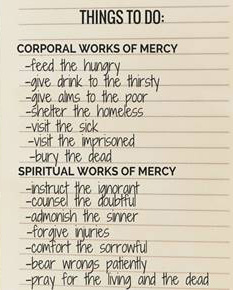
Works of Mercy


Don Schwager quotes “Jesus gives them power to heal and cast out evil spirits,” by Cyril of Alexandria (376-444 AD).


"The grace bestowed upon the holy apostles is worthy of all admiration. But the bountifulness of the Giver surpasses all praise and admiration. He gives them, as I said, his own glory. They receive authority over the evil spirits. They reduce to nothing the pride of the devil that was so highly exalted and arrogant. They render ineffectual the demon's wickedness. By the might and efficacy of the Holy Spirit, burning them as if they were on fire, they make the devil come forth with groans and weeping from those whom he had possessed... "He glorified his disciples, therefore, by giving them authority and power over the evil spirits and over sicknesses. Did he honor them without reason and make them famous without any logical cause? How can this be true? It was necessary, most necessary, that they should be able to work miracles, having been publicly appointed ministers of sacred proclamations. By means of their works, they then could convince men that they were the ministers of God and mediators of all beneath the heaven. The apostles then could invite them all to reconciliation and justification by faith and point out the way of salvation and of life that is this justification." (excerpt from COMMENTARY ON LUKE, HOMILY 47)5

The Word Among Us Meditation on Hebrews 12:18-19, 21-24 comments that everyone can approach God in prayer and expect to be heard. This means that, like the apostles in today’s Gospel, we can be God’s representative, a bearer of his peace wherever we go.

Primarily, we are marked by confidence. We can be secure in God’s love for us. We don’t need to compete with each other or jockey for that position. This means we can live and worship in harmony, voices blending rather than trying to distinguish themselves from the crowd. We can step forward to serve without worrying that we will fail. And we can respectfully step aside to let someone else freely exercise their gifts in their own unique way. We can ask Jesus to help us see how deeply he treasures each brother and sister.6 

James Hanvey SJ is interviewed by Jan Regner SJ as he comments on four components of Fratelli tutti.


Exploring Fratelli tutti: 1. Freedom, joy and friendship

Exploring Fratelli tutti: 2. Politics and the common good

Exploring Fratelli tutti: 3. Seeing with God’s eyes


Exploring Fratelli tutti: 4. Finding Christ in the world7

Friar Jude Winkler comments on the message of the author of Hebrews about the New Covenant surpassing the glory of the Hebrew Covenant. The mission of apostles is to preach, exorcise demons, and heal. Friar Jude reminds us to work as a community in evangelization and be sensitive to the timing of God’s gift of faith.


Brian McLaren comments that God is Mystery and not any “thing” we can wrap our little brains around. He shares how he realized this during a time of deep doubt and perplexity in his life.

A verse I had memorized in my childhood came to mind: “Trust in the Lord with all your heart, and do not lean on your own understanding” [Proverbs 3:5]. For the first time, it dawned on me: there’s a difference between doubting God and doubting my understanding of God, just as there’s a difference between trusting God and trusting my understanding of God. Would I be able to doubt my understanding of God while simultaneously trusting God beyond my understanding? In a strange way, that question for the first time in my life allowed me to see God as a mystery distinct from my concepts of God. [1]8 

Through our relationships with others, we learn to be humble and merciful in our action as followers of Christ.


References

1

(n.d.). Hebrews, CHAPTER 12 | USCCB. Retrieved February 4, 2021, from https://bible.usccb.org/bible/hebrews/12 

2

(n.d.). Psalms, PSALM 48 | USCCB. Retrieved February 4, 2021, from https://bible.usccb.org/bible/psalms/48 

3

(n.d.). Mark, CHAPTER 6 | USCCB. Retrieved February 4, 2021, from https://bible.usccb.org/bible/mark/6 

4

(n.d.). Creighton U Daily Reflections - Online Ministries - Creighton University. Retrieved February 4, 2021, from https://onlineministries.creighton.edu/CollaborativeMinistry/020421.html 

5

(n.d.). Daily Scripture Readings and Meditations. Retrieved February 4, 2021, from https://www.dailyscripture.net/daily-meditation/?ds_year=2021&date=feb4 

6

(n.d.). The Word Among Us: Homepage. Retrieved February 4, 2021, from https://wau.org/meditations/2021/02/04/180735/ 

7

(2020, December 18). Exploring Fratelli tutti: 4. Finding Christ in the world | Thinking Faith .... Retrieved February 4, 2021, from https://www.thinkingfaith.org/articles/exploring-fratelli-tutti-4-finding-christ-world 

8

(2021, February 4). Lean Not on Your Own Understanding — Center for Action and .... Retrieved February 4, 2021, from https://cac.org/lean-not-on-your-own-understanding-2021-02-04/ 


Sunday, December 13, 2020

Rejoice


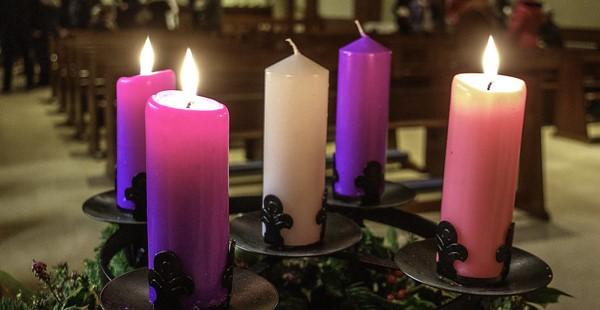
The texts from the Roman Catholic Lectionary today invite us to rejoice that in spite of the difficulties we encounter in our journey, we have Jesus Presence to call us to joy.
Photo by Damien Walmsley via flickr.com Photo shared via Creative Commons (CC BY-NC 2.0)


The reading from the Prophet Isaiah proclaims the Good News of Deliverance.


* [61:12] The prophet proclaims that he has been anointed by the Lord to bring good news (cf. 40:9) to the afflicted and to comfort Zion. The background to the “year of favor” is the jubilee year of release from debts (Lv 25:1011; Is 49:8).1

The Canticle from the Gospel of Luke is Mary’s Song of Praise.


* [1:4655] Although Mary is praised for being the mother of the Lord and because of her belief, she reacts as the servant in a psalm of praise, the Magnificat. Because there is no specific connection of the canticle to the context of Mary’s pregnancy and her visit to Elizabeth, the Magnificat (with the possible exception of v. 48) may have been a Jewish Christian hymn that Luke found appropriate at this point in his story. Even if not composed by Luke, it fits in well with themes found elsewhere in Luke: joy and exultation in the Lord; the lowly being singled out for God’s favor; the reversal of human fortunes; the fulfillment of Old Testament promises. The loose connection between the hymn and the context is further seen in the fact that a few Old Latin manuscripts identify the speaker of the hymn as Elizabeth, even though the overwhelming textual evidence makes Mary the speaker.2

The reading from the First Letter to the Thessalonians urges us to rejoice always.


* [5:23] Another possible translation is, “May the God of peace himself make you perfectly holy and sanctify your spirit fully, and may both soul and body be preserved blameless for the coming of our Lord Jesus Christ.” In either case, Paul is not offering an anthropological or philosophical analysis of human nature. Rather, he looks to the wholeness of what may be called the supernatural and natural aspects of a person’s service of God.3

The Gospel of John presents the Testimony of John the Baptist.


* [1:26] I baptize with water: the synoptics add “but he will baptize you with the holy Spirit” (Mk 1:8) or “…holy Spirit and fire” (Mt 3:11; Lk 3:16). John’s emphasis is on purification and preparation for a better baptism.4

David Crawford comments that it is understandable that the Jewish leaders might wonder if the strangely dressed, charismatic, prophet-like figure – who after all was the son of a devout priest from the Jerusalem temple – was a candidate for the exalted role. What we know, though, is that many of these same folks who failed to recognize Christ when He was right in front of them.  Jesus did not match their preconceptions of who a Messiah would be.

 It occurs to me that the priests, Levites, and Pharisees were looking for a new version of Israel’s great prophets and kings of days gone by, but they were thinking too small.  We often do the same.  Over a half century ago, J. B. Phillips, in his book Your God Is Too Small, challenges Christians (and skeptics) to stop defining God in ways that make our Creator comprehensible to us and realize that God is greater than we can envision.  At a time when we wonder how the world will get through the pandemic or get past deep political and racial divisions, know that God can handle this.  Rejoice!5

Don Schwager quotes “The time of reckoning is the first advent of Christ,” by Cyril of Alexandria (376-444 AD).


"Being God by nature, the Only Begotten [Jesus Christ the Son of the Father] is the Holy of Holies, and he sanctifies all creation and so originates from the Holy Father with the Holy Spirit proceeding from him and sending in the power from above to those on earth who recognize him. How was he sanctified? For he is God and man equally; he gives the Spirit to creation but receives the Spirit on account of being human… "'Acceptable' is that year in which we were received, when we took kinship with him, having our sins washed away through holy baptism and becoming partakers of the divine nature through the sharing of the Holy Spirit (2 Peter 1:4). Or 'acceptable' is the year in which he revealed his glory through the divine miracle attesting the message. We received the time for salvation gladly... the day of reckoning is none other than the time of his dwelling among us in which the reckoning has been given by him to those believing in him through the promise in hope... For the Savior himself said, 'Now is the judgment of this world, now is the prince of the world cast out' (John 12:31). The time of reckoning, then, is in this manner, when Christ illuminated the world." (excerpt from COMMENTARY ON ISAIAH 5.5.61.1-3)6

The Word Among Us Meditation on John 1:6-8, 19-28 reflects that Jesus is near to us too, but sometimes we have trouble recognizing him. In the flurry of our Christmas preparations. In our grieving over a deceased loved one. In our worries about the future. Our faith tells us that Jesus is there, but it feels hard to sense his presence in our midst. Even John had trouble: “I did not know him,” he says later, but “now I have seen and testified that he is the Son of God” (John 1:33, 34).

 So who makes the difference? The Holy Spirit. Jesus calls him the “Spirit of truth” who guides us to all truth (John 16:13). The Spirit is the One who makes Jesus present to us and helps us understand who he is. John tried to show his questioners that they were missing something important. Similarly, the Spirit can open our eyes so that we don’t miss seeing Jesus present in our lives. Jesus isn’t hiding; he gave us the Spirit so that everyone can know him. And that’s a reason to rejoice. “Open my eyes, Holy Spirit. Help me to recognize Jesus today.”7

Friar Jude Winkler shares insight into the texts today.The Jubilee year proclaimed by Isaiah is a time of reordering of justice.The paraenesis, quick set of instructions, at end of letter of Paul includes rejoicing and prayer. Friar Jude examines the Levirate marriage symbology in the Gospel pointing to the unworthiness of John the Baptist to marry the widow, Israel.


Patrick Nogoy SJ, a Jesuit of the Philippines Province studying for a PhD in political philosophy at University College London, comments that to arrest the damaging effects of this irrational indifference and cruelty, Pope Francis proposes the idea of fraternity. From it, he draws a fresh understanding of solidarity as social friendship. He also enumerates some concrete measures that attend to the malaise of an increasingly un-fraternal world.


A way to boost our morale is to listen again to the ‘testimonies to the light’, such as John was for those strangers-in-need of God’s salvation during his time. We can draw inspiration today from the many narratives that reflect God’s light – those who delightfully serve others with gratitude. The witness of carers, nurses, volunteers, cleaners, teachers and parents in this time of pandemic – ordinary saints among us who awaken us to our shared call to subject others to the power of love in the manner of Saint Francis.[5] The stories of those who have had personal experiences of healing and faith and have not let these spiritual gains remain private but instead moved to the public realm where they were undeterred in acting as good Samaritans – or innkeepers[6]: forming hospitable communities for those who are strangers-in-need through their championing of policies, causes and organisations.8

Fr. Richard Rohr, OFM, comments that Kenosis, which means “letting go” or “self-emptying,” is clearly the way of Jesus. Fr. Richard’s spiritual father Saint Francis of Assisi lived kenosis passionately, and it is key to his own teaching. He believes all great spirituality is about letting go. Yet many associate letting go with Buddhism more than with Christianity.  Sadly, Christianity seems to have become more about “saving your soul” or what some now call “spiritual capitalism.”


I have grown up with a capitalist and individualistic worldview, not a Gospel or Franciscan worldview. That doesn’t make us bad or entirely wrong. But it has severely limited our spiritual understanding—and Christianity’s power to transform culture and history. We tend to think that “more for me” is naturally better. South African Dominican writer Albert Nolan viewed our Western crisis of meaning with clarity: The cultural ideal of the Western industrialized world is the self-made, self-sufficient, autonomous individual who stands by himself or herself, not needing anyone else . . . and not beholden to anyone for anything. . . . This is the ideal that people live and work for. It is their goal in life, and they will sacrifice anything to achieve it. This is how you “get a life for yourself.” This is how you discover your identity. . . . There have been plenty of people in the past with inflated egos—kings, conquerors, and other dictators—but in the Western world today the cultivation of the ego is seen as the ideal for everyone. Individualism permeates almost everything we do. It is a basic assumption. It is like a cult. We worship the ego. [1]9

This Advent Sunday for rejoicing is an opportunity to recharge our commitment to our brothers and sisters as we share our struggle for a Jubilee restoration in our society.


References

1

(n.d.). Isaiah, CHAPTER 61 | USCCB. Retrieved December 13, 2020, from https://bible.usccb.org/bible/isaiah/61 

2

(n.d.). Luke, CHAPTER 1 | USCCB. Retrieved December 13, 2020, from https://bible.usccb.org/bible/luke/1 

3

(n.d.). 1 Thessalonians, CHAPTER 5 | USCCB. Retrieved December 13, 2020, from https://bible.usccb.org/bible/1thessalonians/5 

4

(n.d.). John, CHAPTER 1 | USCCB. Retrieved December 13, 2020, from https://www.usccb.org/bible/john/1 

5

(n.d.). Daily Reflections - Online Ministries .... Retrieved December 13, 2020, from https://onlineministries.creighton.edu/CollaborativeMinistry/121320.html 

6

(n.d.). Daily Scripture Readings and Meditations. Retrieved December 13, 2020, from https://www.dailyscripture.net/daily-meditation/?ds_year=2020&date=dec13 

7

(n.d.). The Word Among Us: Homepage. Retrieved December 13, 2020, from https://wau.org/meditations/2020/12/13/177572/ 

8

(n.d.). A stranger-in-need is a neighbour indeed | Thinking Faith: The .... Retrieved December 13, 2020, from https://www.thinkingfaith.org/articles/stranger-need-neighbour-indeed 

9

(2020, December 13). Less Is More — Center for Action and Contemplation. Retrieved December 13, 2020, from https://cac.org/less-is-more-2020-12-13/