Showing posts with label Second Isaiah. Show all posts

Sunday, December 6, 2020

Remember and Prepare

 The texts from the Roman Catholic Lectionary today resonate with our memorial reflections on the local and national disasters that have occurred on Dec 6.
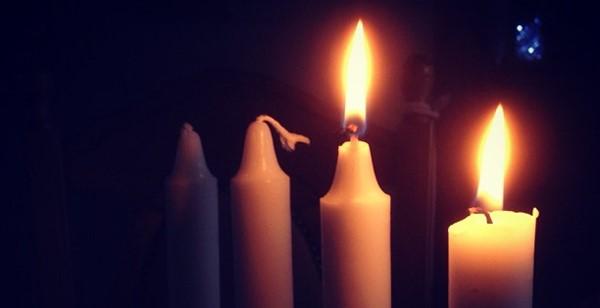
Photo by Susanne Nilsson via flickr.com... Photo shared via Creative Commons (CC BY-SA 2.0)


The reading from the Book of the Prophet Isaiah shares how God’s people are comforted.

 * [40:35] A description of the return of the exiles from Babylon to Jerusalem (Zion). The language used here figuratively describes the way the exiles will take. The Lord leads them, so their way lies straight across the wilderness rather than along the well-watered routes usually followed from Mesopotamia to Israel. Mt 3:3 and gospel parallels adapt these verses to the witness of John the Baptizer to Jesus.1

Psalm 85 is a prayer for the restoration of God’s favour.


* [Psalm 85] A national lament reminding God of past favors and forgiveness (Ps 85:24) and begging for forgiveness and grace now (Ps 85:58). A speaker represents the people who wait humbly with open hearts (Ps 85:910): God will be active on their behalf (Ps 85:1113). The situation suggests the conditions of Judea during the early postexilic period, the fifth century B.C.; the thoughts are similar to those of postexilic prophets (Hg 1:511; 2:69).2

The reading from the Second Letter of Peter is an exhortation to preparedness as we wait for new heavens and a new earth, where righteousness is at home.

 * [3:810] The scoffers’ objection (2 Pt 3:4) is refuted also by showing that delay of the Lord’s second coming is not a failure to fulfill his word but rather a sign of his patience: God is giving time for repentance before the final judgment (cf. Wis 11:2326; Ez 18:23; 33:11).3

In the Gospel of Mark, we hear the Proclamation of John the Baptist concerning Jesus.

 * [1:89] Through the life-giving baptism with the holy Spirit (Mk 1:8), Jesus will create a new people of God. But first he identifies himself with the people of Israel in submitting to John’s baptism of repentance and in bearing on their behalf the burden of God’s decisive judgment (Mk 1:9; cf. Mk 1:4). As in the desert of Sinai, so here in the wilderness of Judea, Israel’s sonship with God is to be renewed.4

Julie Kalkowski comments that all the readings seem to be specifically crafted to address the reality of our world today. These readings can assist us as we are preparing our hearts to welcome Jesus into our world.  If the events in our world are causing grief and anxiety, read and reread the opening lines from Isaiah about comfort.


These are chaotic, uncertain times and I know the only true north in my life is the peace that comes from God. What do I need to do to stay grounded in God so that I can give comfort to others and not add to their unease and worries? In the gospel, Mark describes how people from “the whole of Judean countryside and…. Jerusalem” were traveling to have John baptize them “as they acknowledged their sins.”  What are my sins that I need to acknowledge during this Advent season?  What barriers do I need to dismantle so I can prepare my heart for Jesus’? What is preventing me from becoming someone who can “organize a world according to God’s heart”?5

Frances Murphy, editor of Thinking Faith, writes the need for ‘conversion through remembrance’ about which Pope Francis has spoken recently is also a theme in the readings for the second Sunday of Advent.


The pope’s own thinking bears this out many times over. He spoke to Austen Ivereigh this spring, in the comparatively early days of the pandemic, about the importance of memory and of a ‘conversion through remembrance’.[5] ‘We need to remember our roots, our tradition which is packed full of memories,’ he said, because it is only through confronting these memories, in the vein of the First Week of the Spiritual Exercises, that we can find our way forward along the path that the Spirit is calling us. The tension of looking backwards in order to move forwards also finds a place in Fratelli tutti, the pope’s third encyclical, which calls us to human fraternity. Reconciliation has a strong role to play in the vision for the future that the pope articulates: ‘Reparation and reconciliation will give us new life and set us all free from fear.’[6] There is nothing abstract about the reconciliation in which he is calling us to engage. The all-too-concrete horrors that are a stain on the world’s history (and present) are and should be the subjects of our collective remembrance. The Shoah, the atomic bombs on Hiroshima and Nagasaki, persecutions, the slave trade and ethnic violence[7] – these are the features of the wilderness, the wasteland in which the way of the Lord must be prepared:6

The practice of remembrance today is drawn to the evil and suffering of the Halifax explosion in 1917 and the horror and loss of the killing of 14 women engineering students in a classroom at the engineering school of l'École Polytechnique in 1989.


  Don Schwager quotes “The voice of the one crying in the wilderness,” by Theodoret of Cyr 393-466 A.D.


"The true consolation, the genuine comfort and the real deliverance from the iniquities of humankind is the incarnation of our God and Savior. Now the first who acted as herald of this event was the inspired John the Baptist. Accordingly, the prophetic text proclaims the realities that relate to him in advance, for that is what the three blessed Evangelists have taught us and that the most divine Mark has even made the prologue of his work. As for the inspired John, whom the Pharisees asked whether he himself was the Christ, he declared on his part: 'I am the voice of one crying in the wilderness, Make straight the way of the Lord' as the prophet Isaiah said (John 1:23; Isaiah 40:30); I am not God the Word but a voice, for it is as a herald that I am announcing God the Word, who is incarnate. Moreover, he refers to the Gentiles as the 'untrodden [land]' because they have not yet received the prophetic stamp." (excerpt from COMMENTARY ON ISAIAH 12.40.3)7

The Word Among Us Meditation on Mark 1:1-8 comments that during Advent, we too are preparing for the coming of the Messiah, and part of that preparation also involves repentance. Like the people coming to the Jordan River, we know we have sinned and need forgiveness.


How does this happen? Repentance requires us to take a spiritual inventory of what needs to change in our lives—of where we have fallen short of God’s commands. We don’t have to do this alone; if we ask him, the Holy Spirit will help us search our hearts and will gently reveal our sins to us. Then, when we see where we have strayed, the Spirit helps us see how deeply we need his grace. That causes us to go to Jesus more often and cling to him more tightly. When we experience God cleansing us of our sins, we can’t help but be filled with thanksgiving for his abundant love and for his unfailing, never-ending mercy.8

Friar Jude Winkler comments on the events of Second Isaiah and the second exodus from Babylon. The author of the Second Letter of Peter is explaining the transformation to a new heaven and a new earth is delayed. Friar Jude connects the Lion symbol for Mark and John the Baptist in Elijah’s role to Jesus sharing His Spirit with us.


Fr. Richard Rohr, OFM, comments that Mary could trustingly carry Jesus, because she knew how to receive spiritual gifts—in fact, the spiritual gift. She offers a profound image of how generativity and fruitfulness break into this world. We have much to learn from her.

 First, we learn that we can’t manage, maneuver, or manipulate spiritual energy. It is a matter of letting go and receiving what is given freely. It is the gradual emptying of our attachment to our small “separate” self so that there is room for new conception and new birth. There must be some displacement before there can be any new “replacement”! Mary is the archetype of such self-displacement and surrender. There is no mention of any moral worthiness, achievement, or preparedness in Mary, only humble trust and surrender. She gives us all, therefore, a bottomless hope in our own little state. If we ourselves try to “manage” God or manufacture our own worthiness by any performance principle whatsoever, we will never give birth to the Christ, but only more of ourselves.9

As we pause to remember the terrors of our history, we seek the humility, trust, and surrender of Mary to prepare for the new heaven and the new earth.


References

1

(n.d.). Isaiah, CHAPTER 40 | USCCB. Retrieved December 6, 2020, from https://bible.usccb.org/bible/isaiah/40 

2

(n.d.). Psalms, PSALM 85 | USCCB. Retrieved December 6, 2020, from https://bible.usccb.org/bible/psalms/85?9 

3

(n.d.). 2 Peter, CHAPTER 3 | USCCB. Retrieved December 6, 2020, from https://bible.usccb.org/bible/2peter/3 

4

(n.d.). Mark, CHAPTER 1 | USCCB. Retrieved December 6, 2020, from http://www.usccb.org/bible/mark/1:14 

5

(n.d.). Daily Reflections - Online Ministries .... Retrieved December 6, 2020, from https://onlineministries.creighton.edu/CollaborativeMinistry/120620.html 

6

(2020, December 3). Back to our future | Thinking Faith: The online journal of the .... Retrieved December 6, 2020, from https://www.thinkingfaith.org/articles/back-our-future 

7

(n.d.). Daily Scripture Readings and Meditations. Retrieved December 6, 2020, from https://www.dailyscripture.net/daily-meditation/?ds_year=2020&date=dec6 

8

(2020, December 6). 2nd Sunday of Advent - The Word Among Us. Retrieved December 6, 2020, from https://wau.org/meditations/2020/12/06/177539/ 

9

(2020, December 6). The DNA of Creation — Center for Action and Contemplation. Retrieved December 6, 2020, from https://cac.org/the-dna-of-creation-2020-12-06/ 


Friday, November 29, 2019

Signs of a permanent presence

The texts from the Roman Catholic Lectionary today invite contemplation of what in life is permanent and can be relied upon as a guide for our journey.
Journey continues

The apocalyptic reading from Daniel 7 presents visions of the four Beasts and ultimate judgement before the Ancient One.
* [7:13–14] One like a son of man: In contrast to the worldly kingdoms opposed to God, which are represented as grotesque beasts, the coming Kingdom of God is represented by a human figure. Scholars disagree as to whether this figure should be taken as a collective symbol for the people of God (cf. 7:27) or identified as a particular individual, e.g., the archangel Michael (cf. 12:1) or the messiah. The phrase “Son of Man” becomes a title for Jesus in the gospels, especially in passages dealing with the Second Coming (Mk 13 and parallels).1 
The prayer of Azariah is the response from Daniel 3.
* [3:24–90] These verses are additions to the Aramaic text of Daniel, translated from the Greek form of the book. They were probably first composed in Hebrew or Aramaic, but are no longer extant in the original language. The Roman Catholic Church has always regarded them as part of the canonical Scriptures.2 
Jesus teaches the Lesson of the Fig Tree in the Gospel of Luke.
* [21:5–36] Jesus’ eschatological discourse in Luke is inspired by Mk 13 but Luke has made some significant alterations to the words of Jesus found there. Luke maintains, though in a modified form, the belief in the early expectation of the end of the age (see Lk 21:27, 28, 31, 32, 36), but, by focusing attention throughout the gospel on the importance of the day-to-day following of Jesus and by reinterpreting the meaning of some of the signs of the end from Mk 13 he has come to terms with what seemed to the early Christian community to be a delay of the parousia.3 
Scott McClure reflects on what it means to be Christian – to act in a Christian way as love, kindness, community, patience, and similar words come to mind… as characteristics of this way… Beyond “Because these are good ways to act” what is the reason for our striving to act in this way, as Christians?
 Our answer lies in today’s psalm: Give glory and eternal praise to him! (Daniel 3). How timely a message as we enter the season of Advent! We are called to glorify and praise God; to worship God. This requires a consciousness of the transcendent, an eternal realm that ensures, as Jesus, himself, says: my words will not pass away (Lk 21:33). Those present at the nativity had such an awareness.4
Don Schwager quotes “My words will not pass away,” by an anonymous early author from the early Greek fathers.

  "'This generation' refers both to those who suffer temptation and to those who cause it. It refers to sinners among men and to the demons who are at work in them. For neither group will cease being in the world until its consummation. For Christ said, 'Depart from me, you cursed, into the eternal fire prepared for the devil and his angels' (Matthew 25:41). Moreover, it is necessary that the source of temptation be preserved as long as there is faith which needs testing. It is also possible, however, that 'this generation' refers to those mortal Christians who would not pass over into eternal life and be made immortal and impassible 'until' all the events about which Christ was speaking had taken place.    "'Heaven and earth will pass away, but my words will not pass away' because heaven and earth were created to serve you, but my words were uttered to govern you. Both heaven and earth are subject to vanity, as the apostle said, 'Creation is subject to vanity' (Romans 8:20). Truth, however, is by nature unable to deceive and can never die." (excerpt from INCOMPLETE WORK ON MATTHEW, HOMILY 49, the Greek fathers).5 

The Word Among Us Meditation on Daniel 7:2-14 comments that Biblical scholars say Daniel’s vision is a creative interpretation of Israel’s past and present, ending with the promise that God’s justice will prevail. But that doesn’t keep us from wanting to look for predictions of the future in the cryptic symbolism Daniel uses.
 As Pope Francis proclaimed at the inaugural Mass for his first World Youth Day, “The ‘dragon,’ evil, is present in our history, but it does not have the upper hand. The One with the upper hand is God, and God is our hope!”
Even Daniel’s bizarre-sounding tale ends with the everlasting dominion of the Ancient One. That’s what we have to hold on to in times of turmoil, confusion, and fear. Take heart; hold on. Christ is in you, and he is victorious!6
Friar Jude Winkler traces the series of pagan empires represented by beasts in Daniel 7 to Seleucid king Antiochus Epiphanes in the 2nd century BCE. Jesus self reference to Son of Man is also connected to being the Suffering Servant of Second Isaiah. Friar Jude reminds of the sign that grey or white hair is of our own end time.


Fr. Richard Rohr, OFM, notes that most of Jesus’ teaching is what we call nondual, for example: “Let the weeds and the wheat grow together” (Matthew 13:30); “My Father’s sun shines on the good and the bad” (Matthew 5:45). But there are some areas where he’s absolutely dualistic, either/or—usually anything having to with the poor or with money! I believe Jesus is dualistic on these topics because he knows what most of us are otherwise going to do, that most of us will serve mammon. We’re wired to focus on short-term, practical gains. And, of course, money often does solve our short-term problems.
 But I hear Jesus saying that a long-term solution is to seek relationship over money. I saw this at work most clearly when I was able to preach in many “poor” countries that don’t have the same kinds of infrastructure and safety nets that so-called “developed” countries do… In her book, The Soul of Money, Lynne Twist points out that modern science is discovering a similar truth in nature. She writes:
The idea that scarcity and competition are just the way it is is no longer even viable science. Respected evolutionary biologist Elisabet Sahtouris notes that Nature fosters collaboration and reciprocity. Competition in Nature exists, she says, but it has limits, and the true law of survival is ultimately cooperation. . . .7
As we approach the end of this liturgical year, we contemplate signs that remind us of our mortality and the permanent relationship we share with Christ.

References

1
(n.d.). Daniel, chapter 7 - United States Conference of Catholic .... Retrieved November 29, 2019, from http://www.usccb.org/bible/daniel/7 
2
(n.d.). Daniel, chapter 3. Retrieved November 29, 2019, from http://www.usccb.org/bible/daniel/3 
3
(n.d.). Luke 21. Retrieved November 29, 2019, from http://www.usccb.org/bible/luke/luke21.htm 
4
(n.d.). Daily Reflections - OnlineMinistries .... Retrieved November 29, 2019, from https://onlineministries.creighton.edu/CollaborativeMinistry/daily.html 
5
(n.d.). Daily Scripture Readings and Meditations. Retrieved November 29, 2019, from https://dailyscripture.servantsoftheword.org/ 
6
(n.d.). 34th Week in Ordinary Time - Mass Readings and Catholic .... Retrieved November 29, 2019, from https://wau.org/meditations/2019/11/29/ 
7
(2019, November 29). Finding Security in Relationships — Center for Action and .... Retrieved November 29, 2019, from https://cac.org/finding-security-in-relationships-2019-11-29/