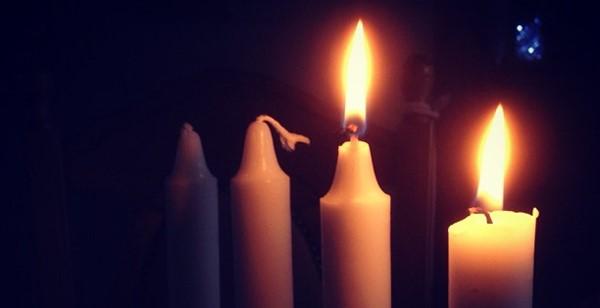
The texts from the Roman Catholic Lectionary today remind us to act on our commission to be workers in the vineyard of the Lord, especially as we share our support with people who have experienced tragedy and loss.
Halifax Explosion Dec 6, 1917 on the CBC
The Reading from the Book of the Prophet Isaiah urges us to seek understanding of Divine teaching.
* [30:20] Teacher: God, who in the past made the people blind and deaf through the prophetic message (6:9–10) and who in his anger hid his face from the house of Jacob (8:17), shall in the future help them to understand his teaching clearly (cf. Jer 31:34). (“Isaiah, CHAPTER 30 | USCCB,” n.d.)
Psalm 147 praises the powerful creator who restores exiled Judah.
* [Psalm 147] The hymn is divided into three sections by the calls to praise in Ps 147:1, 7, 12. The first section praises the powerful creator who restores exiled Judah (Ps 147:1–6); the second section, the creator who provides food to animals and human beings; the third and climactic section exhorts the holy city to recognize it has been re-created and made the place of disclosure for God’s word, a word as life-giving as water. (“Psalms, PSALM 147 | USCCB,” n.d.)
The Gospel of Matthew presents the Compassion of Jesus, the Mission of the Twelve and the Commissioning of the Twelve.
* [9:35] See notes on Mt 4:23–25; Mt 8:1–9:38.
* [9:36] See Mk 6:34; Nm 27:17; 1 Kgs 22:17.
* [9:37–38] This Q saying (see Lk 10:2) is only imperfectly related to this context. It presupposes that only God (the master of the harvest) can take the initiative in sending out preachers of the gospel, whereas in Matthew’s setting it leads into Mt 10 where Jesus does so. (“Matthew, CHAPTER 9 | USCCB,” n.d.)
* [10:1] His twelve disciples: although, unlike Mark (Mk 3:13–14) and Luke (Lk 6:12–16), Matthew has no story of Jesus’ choosing the Twelve, he assumes that the group is known to the reader. The earliest New Testament text to speak of it is 1 Cor 15:5. The number probably is meant to recall the twelve tribes of Israel and implies Jesus’ authority to call all Israel into the kingdom. While Luke (Lk 6:13) and probably Mark (Mk 4:10, 34) distinguish between the Twelve and a larger group also termed disciples, Matthew tends to identify the disciples and the Twelve. Authority…every illness: activities the same as those of Jesus; see Mt 4:23; Mt 9:35; 10:8. The Twelve also share in his proclamation of the kingdom (Mt 10:7). But although he teaches (Mt 4:23; 7:28; 9:35), they do not. Their commission to teach comes only after Jesus’ resurrection, after they have been fully instructed by him (Mt 28:20).
* [10:5–6] Like Jesus (Mt 15:24), the Twelve are sent only to Israel. This saying may reflect an original Jewish Christian refusal of the mission to the Gentiles, but for Matthew it expresses rather the limitation that Jesus himself observed during his ministry. (“Matthew, CHAPTER 10 | USCCB,” n.d.)
Tom Lenz comments that his feelings about the birds took him back to the troubles we are experiencing in the world today. So much of our conflict seems to come from our dualistic minds focusing on the differences of “the other” in their politics, race, religion, sexual orientation, or just about anything that is not like me or my group.
The birds don’t seem to mind that there are over 11,000 species different from themselves. They all just sing together anyway. Each bird sounds beautiful on its own. But together they sound magical.
Perhaps the birds have something to teach us about civility and the importance of diversity. Isaiah says in today’s reading, “No longer will your Teacher hide himself, but with your own eyes you shall see your Teacher.” And further Jesus says through Matthew, “The Kingdom of heaven is at hand.” Perhaps the gift of the birds is the Teacher shown to the world in a brilliant demonstration to make himself known and to demonstrate that “The Kingdom” is here and now for all if we only have eyes to see and hearts that are open to “the other.” (“Daily Reflections,” n.d.)
Don Schwager quotes “In remembrance of heavenly life,” by Bede the Venerable, 672-735 A.D.
"Why should the lunar reckoning be calculated from the noontide hours, seeing that the moon had not yet been placed in the heavens or gone forth over the earth? On the contrary, none of the feast days of the law began and ended at noon or in the afternoon, but all did so in the evening. Or else perchance it is because sinful Adam was reproached by the Lord 'in the cool of the afternoon' (Genesis 3:8) and thrust out from the joys of Paradise. In remembrance of that heavenly life which we changed for the tribulation of this world, the change of the moon, which imitates our toil by its everlasting waxing and waning, ought specifically to be observed at the hour in which we began our exile. In this way every day we may be reminded by the hour of the moon's changing of that verse, 'a fool changes as the moon' (Sirach 27:11) while the wise man 'shall live as long as the sun' (Psalm 72:5), and that we may sigh more ardently for that life, supremely blessed in eternal peace, when 'the light of the moon shall be as the light of the sun, and the light of the sun shall be sevenfold, as the light of seven days.' Indeed, because (as it is written) 'from the moon is the sign of the feast day' (Sirach 43:7), and just as the first light of the moon was shed upon the world at eventide, so in the law it is compulsory that every feast day begin in the evening and end in the evening (see Exodus 12:18). (excerpt from THE RECKONING OF TIME 3.43) (Schwager, n.d.)
The Word Among Us Meditation on Isaiah 30:19-21, 23-26 comments that as amazing as it was for Jesus to walk the earth and teach us how to live, something even greater has happened: the Holy Spirit has come. Through Baptism he lives in us to “teach [us] everything” and remind all of us of all Jesus has said (John 14:26). He is with us to teach and guide us every day of our lives!
There are many ways to hear and see Jesus, but during Advent, perhaps you can spend some time in prayer before a crèche. As you look upon the scene, ask the Spirit to open your eyes to the presence of the divine Son of God, who came to save you. Or you might read the first few chapters of Luke’s Gospel and ponder the careful preparations God made to reveal his Son to us. God’s promise is true: with your own eyes, you will see your Teacher and Lord!
“Jesus, thank you for coming to earth so that I could ‘see’ you with the eyes of my heart!” (“Meditation on Isaiah 30:19-21, 23-26,” n.d.)
Friar Jude Winkler comments that Isaiah speaks about restoration of Israel in abundant crops and knowledge. God is blessing their teachers to follow the ways of the Lord. Toward the end of the passage it indicates a restoration from an apocalyptic event. In Matthew’s Gospel, Jesus speaks of an abundant harvest but few labourers. The use of the phrase “Kingdom of Heaven” may indicate a Pharisee as a final editor of this Gospel. Even when God's love and power is revealed, Jesus wanted to invite us into His ministry as co-workers. Friar Jude urges us to bring one person a little bit of Gospel joy and good by offering “I will pray for you” as we transform one heart at a time.
Fr. Mike Schmitz emphasizes the power of the Holy Spirit exemplified in Paul's interaction with those in Ephesus in Acts 19 and reminds us that God wants to fill each of us with the same Holy Spirit so we can walk in his strength. Fr. Mike also highlights the power of sacramentals, the reality of demons acknowledging Jesus, and the importance of removing things in our lives that are harmful. Lastly, as we begin reading the Second Letter of Paul to the Corinthians, we get a glimpse of Paul's heart for the people of Corinth. Today's readings are Acts 19, 2 Corinthians 1-2, and Proverbs 28:22-24.
Father Richard Rohr, OFM, introduces Mirabai Starr who recounts how she came to say yes to God in her life as it is instead of how she imagined it should be. She describes being enamored of the God-intoxicated ones. Those rarified souls who slip into ecstatic states and spontaneously utter poetry. The ones who exude deep stillness, embody equanimity, listen more than they speak. The initiated and the ordained, the monastics….
I wanted to be one of them. Until I didn’t.
You do not need to chant all night in a temple in the Himalayas. You don’t have to be the newest incarnation of Mary Magdalene. It is not necessary to read or write spiritual books. You are not required to know the difference between Mahayana and Theravada Buddhism or memorize the Beatitudes. All you have to do to walk the path of the ordinary mystic is to cultivate a gaze of wonder and step onto the road. Keep walking. Rest up, and walk again. Fall down, get up, walk on. Pay attention to the landscape. To the ways it changes and the ways it stays the same. Be alert to surprises and turn with the turning of the seasons. Honor your body, train your mind, and keep your heart open against all odds. Say yes to what is, even when it is uncomfortable or embarrassing or heartbreaking. Hurl your handful of yes into the treetops and then lift your face as the rain of yes drops its grace all over you, all around you, and settles deep inside you. (Rohr, n.d.)
We exhort the Spirit to lead us to our role as disciples of Christ to act on our Baptismal anointing as priest, prophet, and leader in prayer and service for others.
References
Daily Reflections. (n.d.). Creighton Online Ministries: Home. Retrieved December 6, 2025, from https://onlineministries.creighton.edu/daily-reflections/daily-reflection-december-6-2025
Isaiah, CHAPTER 30 | USCCB. (n.d.). Daily Readings. Retrieved December 6, 2025, from https://bible.usccb.org/bible/isaiah/30?19
Matthew, CHAPTER 10 | USCCB. (n.d.). Daily Readings. Retrieved December 6, 2025, from https://bible.usccb.org/bible/matthew/10
Matthew, CHAPTER 9 | USCCB. (n.d.). Daily Readings. Retrieved December 6, 2025, from https://bible.usccb.org/bible/matthew/9
Meditation on Isaiah 30:19-21, 23-26. (n.d.). https://wau.org/meditations/2025/12/06/1440696/
Psalms, PSALM 147 | USCCB. (n.d.). Daily Readings. Retrieved December 6, 2025, from https://bible.usccb.org/bible/psalms/147?1
Rohr, R. (n.d.). Daily Meditations — Center for Action and Contemplation. Center for Action and Contemplation. Retrieved December 6, 2025, from https://cac.org/daily-meditations/mary-and-the-power-of-yes-weekly-summary/
Schwager, D. (n.d.). The Kingdom of Heaven Is at Hand. Daily Scripture Readings and Meditations – Daily Scripture Readings and Meditations. Retrieved December 6, 2025, from https://www.dailyscripture.net/daily-meditation/