The texts of the Roman Catholic Lectionary for Divine Mercy Sunday urge us to act with the mercy that our trust in God has allowed us to experience in our relationship with Christ.
 |
| Act with mercy |
The reading from Acts describes how the signs and wonders of the Apostles after the Resurrection moved people.
* [5:12–16] This, the third summary portraying the Jerusalem community, underscores the Twelve as its bulwark, especially because of their charismatic power to heal the sick; cf. Acts 2:42–47; 4:32–37.1
Psalm 118 is a possible dialogue at the Temple gates between the priests and the psalmist as the latter enters to offer the thanksgiving sacrifice.
* [Psalm 118] A thanksgiving liturgy accompanying a procession of the king and the people into the Temple precincts. After an invocation in the form of a litany (Ps 118:1–4), the psalmist (very likely speaking in the name of the community) describes how the people confidently implored God’s help (Ps 118:5–9) when hostile peoples threatened its life (Ps 118:10–14); vividly God’s rescue is recounted (Ps 118:15–18). Then follows a possible dialogue at the Temple gates between the priests and the psalmist as the latter enters to offer the thanksgiving sacrifice (Ps 118:19–25).2
The passage from the Book of Revelation describes The First Vision of John of Patmos.
* [1:9–20] In this first vision, the seer is commanded to write what he sees to the seven churches (Rev 1:9–11). He sees Christ in glory, whom he depicts in stock apocalyptic imagery (Rev 1:12–16), and hears him describe himself in terms meant to encourage Christians by emphasizing his victory over death (Rev 1:17–20).3
In the Gospel from John Jesus Appearance to the Disciples and later to Thomas becomes high Christology at the original conclusion of this Gospel.
* [20:29] This verse is a beatitude on future generations; faith, not sight, matters.4
Thomas Drzaic observes it is easy to doubt individuals and to suspect there are underlying motives, especially when perceived or actual slights have occurred in the past. How much better could these relationships and interactions be if they are approached with trust and the assumption of positive intent from the other person?
Likewise, I have found my faith can often ebb and flow, with the low points filled with a disconnection from God that seemingly can be filled only with absolute, tangible proof that God is there. Much like Thomas seeking to see and feel the wounds of Christ as proof of His rising, I also seek such affirmation, calling out to God for proof or a sign that God hears me. It is at these times that Christ’s call to faith sustains me and it is well to remember His words ‘blessed are those who have not seen and believed.”
So, on this Divine Mercy Sunday, may we find ourselves placing complete trust and faith in God, accepting his love and mercy unconditionally. May we also live and proclaim our faith freely and boldly in both words and actions, going forth like the Apostles who Christ sent out to spread the Gospel.5
Don Schwager quotes “Touching the Flesh, He Invokes the Word,” by Saint Augustine of Hippo, 354-430 A.D.
"But when Jesus showed Thomas the very places where he had his doubts, Thomas exclaimed, "My Lord and my God." He touched his flesh, he proclaimed his divinity. What did he touch? The body of Christ. Was the body of Christ the divinity of Christ? The divinity of Christ was the Word; the humanity of Christ was soul and flesh. Thomas could not touch the soul, but he could perceive it, because the body that had been dead was moving about alive. But that Word is subject neither to change nor to contact, it neither regresses nor progresses, neither fails nor flourishes, because in the beginning was the Word, and the Word was with God, and the Word was God. That is what Thomas proclaimed. He touched the flesh, he invoked the Word, because the Word became flesh and dwelt among us." (excerpt from Sermon 145A)6
The Word Among Us Meditation on Revelation 1:9-13, 17-19 recalls John of Patmos, Isaiah, (Isaiah 6:5), Ezekiel (Ezekiel 1:28), and Peter (Luke 5:8-10). In each story, God made it clear that the person’s past sins and mere mortality didn’t pose obstacles to him. He was more focused on the work he had for them to do.
This is what divine mercy looked like in biblical times, and it’s what it looks like today. It’s God forgiving our every sin, cleansing our consciences, and easing our fears. It’s also God looking with sadness on a darkened, sinful world and sending us out as his ambassadors.
Do not be afraid. Jesus says these words to you today. Don’t be afraid of God. He loves you and he forgives you. And don’t be afraid to share that mercy with the people around you. Forgive them just as you have been forgiven. Let them see in you the merciful face of God.7
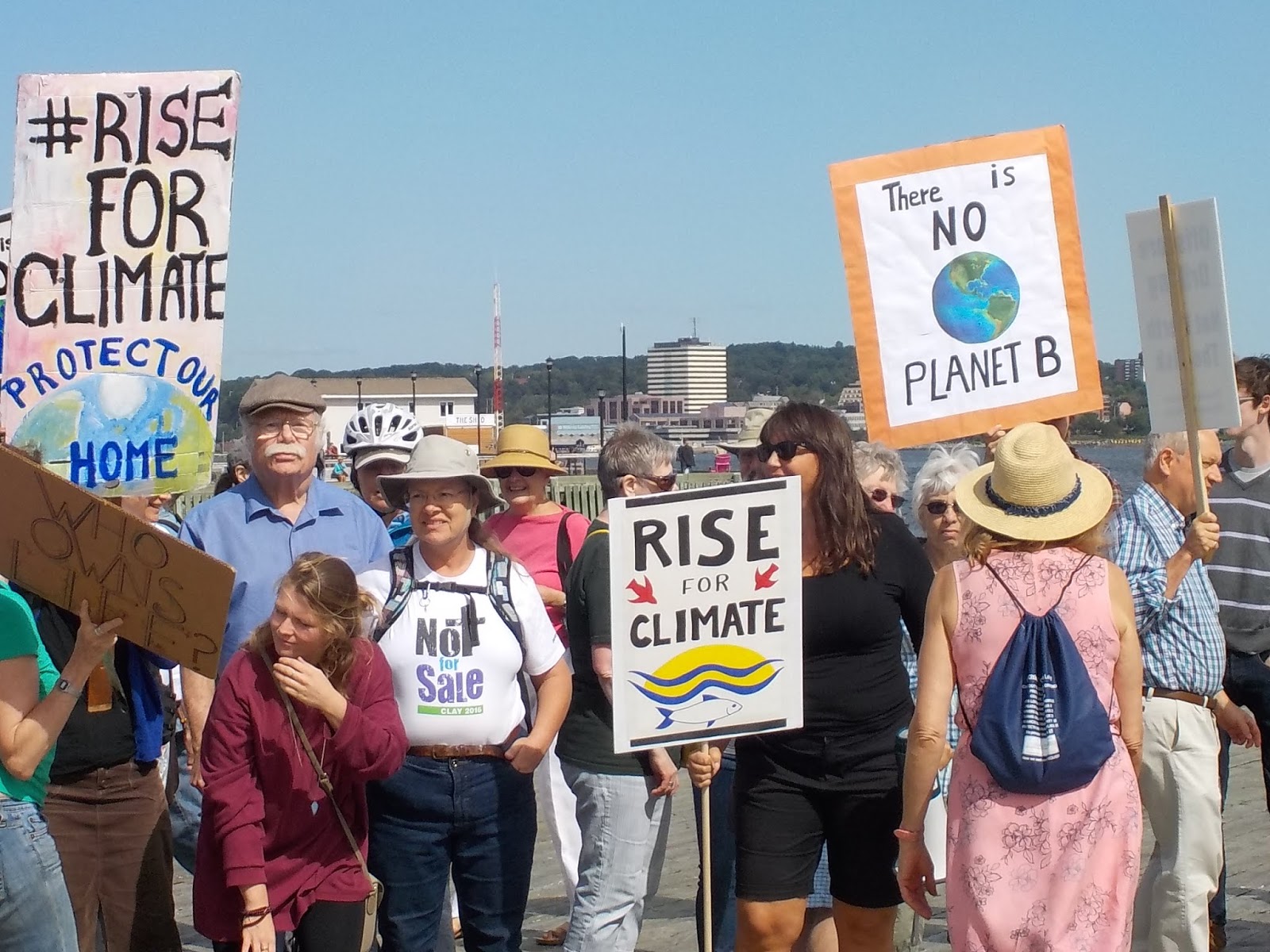
Anna Rowlands and Robert Czerny place Pope Francis’ recognition of an eighth work of mercy in 2016: ‘care for our common home’ in the long and living tradition in which this new work of mercy stands.The introduction of a new work of mercy reflects the perspective of Laudato Si’ that stresses the interconnection of all humans not only with each other but with all of Creation, too.
In Misericordiae Vultus, the papal bull in which Pope Francis established the Jubilee Year of Mercy, he repeats the guidance of Pope Saint John XXIII at the opening of the Second Vatican Council 50 years earlier: ‘Now the Bride of Christ wishes to use the medicine of mercy rather than taking up arms of severity… The Catholic Church, as she holds high the torch of Catholic truth at this Ecumenical Council, wants to show herself a loving mother to all; patient, kind, moved by compassion and goodness toward her separated children’.[v]There is a complex interdependence between humans, other creatures and the natural world, so nature must be part of the scope of our practices of mercy. In today’s world, hunger, violence and poverty cannot be understood apart from the changes and degradation affecting the environment.8
Friar Jude Winkler places the miraculous power of the apostles, similar to Jesus ministry, in Volume 2, where Luke continues the work of Jesus manifested in the Church. Theology from Paul and John is contained in the many symbols used by John of Patmos (pseudonym) writing to the universal Church being persecuted at the end of the first century. Friar Jude reminds us that the high Christology of “My Lord and My God” is voiced by Thomas whose faith, like ours, may be strengthened by pursuing our doubts.
Fr. Richard Rohr, OFM, notes that most of the world religions have some concept of heaven and hell. Why? Because human freedom matters. We have to be given the freedom to say no to love and life, and one word for that is hell.
Pope John Paul II, who certainly was not a liberal, reminded listeners that heaven and hell are not physical places at all; they’re states of being in a living relationship with God or choosing separation from the source of all life and joy. [1] And, if that’s true, there are plenty of people on earth who are in hell now. They often choose to be miserable, hateful, negative, and oppositional. They love to exclude people who are different from them.
St. Catherine of Siena (1347–1380), whose feast we will celebrate tomorrow, received a vision of Jesus Christ as a bridge reaching from heaven to earth, forever joining “humanity with the greatness of the Godhead.” [2] Catholic Worker founder Dorothy Day (1897–1980) was fond of citing Catherine’s inspiration in her own reflections, often writing “All the way to heaven is heaven.” [3] I’d also add “It’s hell all the way to hell.” You’re choosing your destiny right now. You are responsible, not God. Do you want to live in love and communion? Or do you want to live in constant opposition to others and life itself?
As we observe our politics, antagonism appears to be the primary style of communication today—how to fight and win, how to be suspicious, how to be hateful, how to tell lies. Who can we exclude now? Which race, religion, or group is unworthy? (All in the name of God, remember!) That’s simply hell right now. And an awful lot of people, even those who call themselves Christian, appear to be living in a hell of their own construction. That’s why Jesus can say, “I do not know you” even to those who “ate and drank in his company” (see Luke 13:25–27)!9
Divine Mercy and respect for our freedom coexist. We are commissioned to be mercy to others and to all nature. Our relationship in faith with Jesus calls us to choose Life in the Way.
References
1
| |
2
| |
3
|
(n.d.). Revelation, chapter 1 - usccb. Retrieved April 28, 2019, from http://www.usccb.org/bible/revelation/1
|
4
| |
5
|
(n.d.). Creighton U Daily Reflections - OnlineMinistries - Creighton University. Retrieved April 28, 2019, from http://onlineministries.creighton.edu/CollaborativeMinistry/daily.html
|
6
|
(n.d.). Daily Scripture Readings and Meditations. Retrieved April 28, 2019, from https://dailyscripture.servantsoftheword.org/
|
7
|
(2019, April 28). 2nd Sunday of Easter or Sunday of Divine Mercy - Mass Readings and .... Retrieved April 28, 2019, from https://wau.org/meditations/2019/04/28/
|
8
|
(2018, February 19). The eight works of mercy | Thinking Faith: The online journal of the .... Retrieved April 28, 2019, from https://www.thinkingfaith.org/articles/eight-works-mercy
|
9
|
(2019, April 28). Heaven and Hell — Center for Action and Contemplation. Retrieved April 28, 2019, from https://cac.org/heaven-and-hell-2019-04-28/
|

