Showing posts with label unclean. Show all posts

Wednesday, February 9, 2022

Wisdom, Patience and Evil

The texts from the Roman Catholic Lectionary today challenge us to ponder how the gifts of wisdom and patience can aid our management of motives that precede evil action.
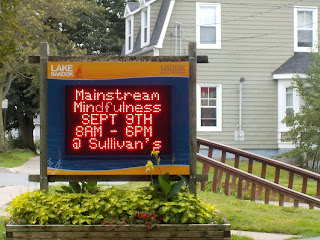
Mindful of Patience


The reading from the First Book of Kings describes the visit of the Queen of Sheba to Solomon.

* [10:113] The sub-unit on Solomon’s wisdom contrasts with 3:1628. There Solomon’s gifts led him to listen to the humblest of his subjects; he accomplished justice and was revered by all his people. Here the emphasis is on his clever speech to a foreign monarch. She is duly impressed by the glory of his court, but it is she, not Solomon, who recalls the monarch’s duty of establishing justice (v. 9). The unit is interrupted briefly by a remark about Solomon’s maritime commerce (10:1112).1
 

Psalm 37  is an exhortation to patience and trust.

* [Psalm 37] The Psalm responds to the problem of evil, which the Old Testament often expresses as a question: why do the wicked prosper and the good suffer? The Psalm answers that the situation is only temporary. God will reverse things, rewarding the good and punishing the wicked here on earth. The perspective is concrete and earthbound: people’s very actions place them among the ranks of the good or wicked. Each group or “way” has its own inherent dynamism—eventual frustration for the wicked, eventual reward for the just. The Psalm is an acrostic, i.e., each section begins with a successive letter of the Hebrew alphabet. Each section has its own imagery and logic.2
 

In the Gospel of Mark, Jesus applies the Tradition of the Elders concerning unclean food to the intentions of our heart.

* [7:19] (Thus he declared all foods clean): if this bold declaration goes back to Jesus, its force was not realized among Jewish Christians in the early church; cf. Acts 10:111:18.3
 

Kimberly Grassmeyer comments that reading Jesus’ words reminds us that nothing from the outside can defile us. What matters is the content of our heart.

Our reflections can challenge us to take stock of what lingers there…   from the list that Jesus enumerated, I can identify too many personal failings:  “From within the man, from his heart, come evil thoughts, unchastity, theft, murder, adultery, greed, malice, deceit, licentiousness, envy, blasphemy, arrogance, folly.  All these evils come from within and they defile.” But the good news is, our reflections can then reveal to us where we still have room to fight against these evils, so that we may grow in love.  The noise and negativity of the world are best dealt with by being true to the better angels that live within us.  Let us pray, asking God to strengthen Christ’s love in our hearts against all things that defile.  Amen. 4 

Don Schwager quotes “The cycle of bitterness broken by forbearance,” by Tertullian, 160-225 A.D.

"Let us, then, his servants, follow our Lord and patiently submit to denunciations that we may be blessed! If, with slight forbearance, I hear some bitter or evil remark directed against me, I may return it, and then I shall inevitably become bitter myself. Either that, or I shall be tormented by unexpressed resentment. If I retaliate when cursed, how shall I be found to have followed the teaching of our Lord? For his saying has been handed down that one is defiled not by unclean dishes but by the words which proceed from his mouth ( Mark 7:15)."(excerpt from ON PATIENCE 8)5
 

The Word Among Us Meditation on Psalm 37:5-6, 30-31, 39-40 comments that it is easy to think that committing our way to the Lord should be like jumping out of an airplane: no going back, no changing our mind. But it’s not an absolute “once and done” deed. It’s a commitment that we need to reaffirm every day. Today’s responsorial psalm encourages that.

As you do, God will act. Perhaps he will give you a wealth of wisdom or comforting words to share with someone who is struggling. Or maybe you will experience the riches of patience in a difficult situation, healing of an illness, or freedom from habitual sin. Strive to follow the Lord faithfully (not necessarily perfectly), and you will see him act. Recall this verse often during the day, and renew your commitment to God as you do. You don’t have to be perfect—neither King David nor King Solomon was. Just ask God, who is good and who loves you, to help you do better. He will guide your every step. “Lord, I commit my day to you today. Help me to walk in your paths.”6 

Friar Jude Winkler fleshes out the understanding of wisdom in the time of Solomon. Some of the evil motivations in our heart are listed in the Gospel. Friar Jude reminds us of the lifelong struggle to purify our motivations.


CAC teacher, Brian McLaren, sees the Trinity as offering a healing vision of the world, in which we create a holy community that overturns categories of “us” and “them”. This Trinitarian vision of God helps us imagine a relational universe of one-another ness, community-in-unity, unity-in-community, being-in-interbeing, where benevolence toward the other is at home, and hostility toward the other is foreign, invasive, out of place.

God-with-God in community leads us to envision God-with-us in community. And that vision in turn dares us to imagine God-with-them in community. And that expansive vision invites us higher still: to envision God-with-us-and-with-them in community. This approach to the Trinity need not be a litmus test used to legitimize us and delegitimize them. Instead, it can be a gift, offered to others like a poem, not an ultimatum—given not to require assent-leading-to-acceptance or dissent-leading-to-condemnation, but rather to inspire us to reverence otherliness as a theological attribute. At that moment, Trinitarianism becomes not only a healing doctrine but a healing practice. [2]7
 

The divisions and disagreements that we witness in our society today show us the need to seek the guidance of the Spirit to the wisdom and patience we need to live out our call to love all the people we encounter on our journey.


References

1

(n.d.). 1 Kings, CHAPTER 10 | USCCB. Retrieved February 9, 2022, from https://bible.usccb.org/bible/1kings/10 

2

(n.d.). Psalms, PSALM 37 | USCCB. Retrieved February 9, 2022, from https://bible.usccb.org/bible/psalms/37 

3

(n.d.). Mark, CHAPTER 7 | USCCB. Retrieved February 9, 2022, from https://bible.usccb.org/bible/mark/7 

4

(n.d.). Creighton U Daily Reflections - Online Ministries. Retrieved February 9, 2022, from https://onlineministries.creighton.edu/CollaborativeMinistry/020922.html 

5

(n.d.). Daily Scripture Readings and Meditations. Retrieved February 9, 2022, from https://www.dailyscripture.net/daily-meditation/?ds_year=2022&date=feb9 

6

(n.d.). Mass Readings and Catholic Daily Meditations for February 9, 2022. Retrieved February 9, 2022, from https://wau.org/meditations/2022/02/09/309868/ 

7

(n.d.). Daily Meditations Archive - Center for Action and Contemplation. Retrieved February 9, 2022, from https://cac.org/each-a-god-carrier-2022-02-09/ 


Monday, September 13, 2021

Prayer for Help

The texts from the Roman Catholic Lectionary today invite us to contemplate the role of prayer in developing our relationship with God.
Place for Prayer


The reading from the First Letter of Timothy offers instructions concerning prayer and conduct.

* [2:17] This marked insistence that the liturgical prayer of the community concern itself with the needs of all, whether Christian or not, and especially of those in authority, may imply that a disposition existed at Ephesus to refuse prayer for pagans. In actuality, such prayer aids the community to achieve peaceful relationships with non-Christians (1 Tm 2:2) and contributes to salvation, since it derives its value from the presence within the community of Christ, who is the one and only savior of all (1 Tm 2:36). The vital apostolic mission to the Gentiles (1 Tm 2:7) reflects Christ’s purpose of universal salvation. 1 Tm 2:5 contains what may well have been a very primitive creed. Some interpreters have called it a Christian version of the Jewish shema: “Hear, O Israel, the LORD is our God, the LORD alone…” (Dt 6:45). The assertion in 1 Tm 2:7, “I am speaking the truth, I am not lying,” reminds one of similar affirmations in Rom 9:1; 2 Cor 11:31; and Gal 1:20.1 

Psalm 28 is a prayer for help and thanksgiving.

* [Psalm 28] A lament asking that the psalmist, who has taken refuge in the Temple (Ps 28:2), not be punished with the wicked, who are headed inevitably toward destruction (Ps 28:1, 35). The statement of praise is exceptionally lengthy and vigorous (Ps 28:67). The Psalm ends with a prayer (Ps 28:89).2 

In the Gospel of Luke, Jesus heals a centurion’s servant.

* [7:110] This story about the faith of the centurion, a Gentile who cherishes the Jewish nation (Lk 7:5), prepares for the story in Acts of the conversion by Peter of the Roman centurion Cornelius who is similarly described as one who is generous to the Jewish nation (Acts 10:2). See also Acts 10:3435 in the speech of Peter: “God shows no partiality…whoever fears him and acts righteously is acceptable to him.” See also notes on Mt 8:513 and Jn 4:4354.3 

Tamora Whitney (from 2019) comments that the soldier knows that when he is given an order, he carries it out. He knows that when he gives an order to his servants his will is carried out. He knows that if Jesus says something, it will happen. Because of course, Jesus’ healing word is even stronger than the orders of this soldier.  He has faith in the system, and even more faith in the Lord.

Jesus appreciates the man’s faith.  He says, “Amen, I say to you, in no one in Israel have I found such faith.”  He should have found such faith in Israel.  That is where the people would profess to have the most faith, but the strongest faith found was in a man of violence-- a soldier-- a centurion – an outsider. He understands Jesus’ authority and his power. Pray all leaders use their authority and their power well. It is a man of war who professes the strongest faith in the Lord, and who has the most devotion to His authority.4 

Don Schwager quotes “The power of Divinity and the grace of humility,” by Ambrose of Milan, 339-397 A.D.

"How great is the sign of divine humility, that the Lord of heaven by no means disdained to visit the centurion's servant! Faith is revealed in deeds, but humanity is more active in compassion. Surely he did not act this way because he could not cure in his absence, but in order to give you a form of humility for imitation he taught the need to defer to the small and the great alike. In another place he says to the ruler, 'Go, your son lives' (John 4:50), that you may know both the power of Divinity and the grace of humility. In that case he refused to go to the ruler's son, lest he seem to have had regard for riches. In this case he went himself lest he seem to have despised the humble rank of the centurion's servant. All of us, slave and free, are one in Christ (Galatians 3:28, Colossians 3:11)." (excerpt from EXPOSITION OF THE GOSPEL OF LUKE 5.84)5 

The Word Among Us Meditation on Luke 7:1-10 comments that we tend to think of humility as something positive but not particularly fun, like eating a bland salad just because it’s good for us. But the centurion’s life shows us how humility can make our relationships rich, full, and pleasing to the Lord.

Instead of focusing inward, on his own importance, the centurion focused outward. He reached out to help the people around him, even those of a different social status and background. And as a result, he won the respect of people who should have called him their enemy. His humble approach toward Jesus was also so genuine that Jesus was “amazed” at his faith and healed his servant on the spot (Luke 7:9). It’s a lesson that when we incorporate humility into our love for God and neighbor, we too will reap blessings. “Jesus, help me to love with humility. May I never judge other people as less important than myself.”6 

Friar Jude Winkler considers the attitude toward officials of the author of the pastoral letter to Timothy. The Book of Revelation and Jesus' recommendation on what was owing to Caesar offer other approaches to civic authority. Friar Jude reminds us how the faith of the centurion is in harmony with the ministry of Luke to the Gentiles.


The Franciscan Media web page about Saint John Chrysostom comments that his zeal led him to decisive action. Bishops who bribed their way into office were deposed. Many of his sermons called for concrete steps to share wealth with the poor. The rich did not appreciate hearing from John that private property existed because of Adam’s fall from grace any more than married men liked to hear that they were bound to marital fidelity just as much as their wives were. When it came to justice and charity, John acknowledged no double standards.

John Chrysostom’s preaching, by word and example, exemplifies the role of the prophet to comfort the afflicted and to afflict the comfortable. For his honesty and courage, he paid the price of a turbulent ministry as bishop, personal vilification, and exile.7 

Fr. Richard Rohr, OFM, comments that the Christian image of a torturous hell and God as a petty tyrant has not helped us to know, trust, or love God—or anything else. If we understand God as Trinity—the fountain fullness of overflowing love, and relationship itself—there is no theological possibility of any hatred or vengeance in God.

Divinity, which is revealed as Love Itself, will always eventually win. God does not lose (see John 6:37-39). We are all saved by mercy. This is an orthodox opinion! In his book Introduction to Christianity, Pope Benedict XVI explains his understanding of the curious phrase in the middle of the Apostles’ Creed: “[Jesus] descended into hell.” Benedict says that since Christ went into hell, that means hell “is hell no longer . . . because love dwells in it.” [1] Jesus Christ and hell cannot coexist; once Jesus got there, the whole game of punishment was over, as it were. A basic principle of nonviolence is that we cannot achieve good by doing bad.8 

The humility that comes from our relationship with God opens our life to authentic experiences of mercy, compassion, and healing.


References

1

(n.d.). 1 Timothy, CHAPTER 2 | USCCB. Retrieved September 13, 2021, from https://bible.usccb.org/bible/1timothy/2 


2

(n.d.). Psalm 28 - USCCB. Retrieved September 13, 2021, from https://bible.usccb.org/bible/psalms/28 


3

(n.d.). Luke, CHAPTER 7 | USCCB. Retrieved September 13, 2021, from https://bible.usccb.org/bible/luke/7 


4

(n.d.). Creighton U Daily Reflections - Online Ministries. Retrieved September 13, 2021, from https://onlineministries.creighton.edu/CollaborativeMinistry/091321.html 


5

(n.d.). Daily Scripture Readings and Meditations. Retrieved September 13, 2021, from https://www.dailyscripture.net/daily-meditation/?ds_year=2021&date=sep13 


6

(2021, September 13). Mass Readings and Catholic Daily Meditations for September 13 .... Retrieved September 13, 2021, from https://wau.org/meditations/2021/09/13/197883/ 


7

(n.d.). Saint John Chrysostom | Franciscan Media. Retrieved September 13, 2021, from https://www.franciscanmedia.org/saint-of-the-day/saint-john-chrysostom 


8

(n.d.). Daily Meditations Archive: 2021 - Center for Action and Contemplation. Retrieved September 13, 2021, from https://cac.org/choosing-heaven-now-2021-09-13/