Showing posts with label loincloth. Show all posts

Monday, July 27, 2020

Provoked and Proclaimed

The texts from the Roman Catholic Lectionary challenge us to contemplate the contrast between poor decisions that may provoke God and our efforts to undertake small actions to build the Kingdom of God.
Building the Kingdom

In the reading from the Prophet Jeremiah a linen loincloth is used to point to Judah’s corruption.
 * [13:1–11] In this symbolic action, Jeremiah probably went to the village and spring of Parah, two and a half miles northeast of Anathoth, whose name closely resembled the Hebrew name of the river Euphrates (Perath), in order to dramatize the religious corruption of Judah at the hands of the Babylonians.1
In the poem from Deuteronomy 32, God declares “They made me jealous with what is no god, provoked me with their idols.”
 * [32:1–43] The whole song is a poetic sermon, having for its theme the Lord’s benefits to Israel (vv. 1–14) and Israel’s ingratitude and idolatry in turning to the gods of the nations; these sins will be punished by the nations themselves (vv. 15–29); in turn, the foolish pride of the nations will be punished, and the Lord’s honor will be vindicated (vv. 30–43).2
In the Gospel of Matthew, Jesus tells parables of the mustard seed and yeast to describe the Kingdom of God.
 * [13:31–33] See Mk 4:30–32; Lk 13:18–21. The parables of the mustard seed and the yeast illustrate the same point: the amazing contrast between the small beginnings of the kingdom and its marvelous expansion.3
Scott McClure comments that as God's children - both worldwide and in our local communities - we have the opportunity every day to use our free will to be Christ to one another, or to not.
 With our gaze fixed ultimately on communion with God in heaven, we have the opportunity every day to build God's Kingdom in our very own communities, or to not. In our work to bring about the Kingdom of heaven, let us begin in our own communities, with those we encounter. Perhaps, then, we may realize a glimpse of the blooming and the leavening of the Kingdom of heaven and devote ourselves all the more to its arrival.4
Don Schwager quotes “A small seed produces a great tree,” by John Chrysostom (347-407 AD).
 "Therefore he brought forward the similitude of this herb, which has a very strong resemblance to the kingdom of heaven. It indeed is 'the least of all seeds, but when it is grown, it is the greatest among herbs and becomes a tree, so that the birds of the air come and lodge in the branches thereof.'Thus he meant to set forth the most decisive sign of its greatness. 'Even so then shall it also be with respect to the gospel,' he says. For his disciples were weakest of all and least of all. Nevertheless, because of the great power that was in them, it has grown and been unfolded in every part of the world." (excerpt from the THE GOSPEL OF MATTHEW, HOMILY 46.2)5
The Word Among Us Meditation on Matthew 13:31-35 comments that maybe we don’t see that heavenly kingdom right now. Maybe all we can imagine is a glorious future congregation of angels, saints, and holy people. Or maybe all we hear now is the crowing and cackling of innumerable crows and hummingbirds, eagles and wrens—a kingdom fraught with noisy squabbling…. we are citizens of this kingdom too! We have received new life and the power that belongs only to those living in it. The power to ask for God’s favor and receive it. The power to reconcile, to forgive, to heal, and to endure. And not only power but also blessings have come to us—blessings of “righteousness, peace, and joy in the holy Spirit” (Romans 14:17). These blessings will last forever, into eternity.
 So whenever the world seems too dark and too powerful, remember that God has already delivered you out of that darkness and has transferred you to his heavenly kingdom (Colossians 1:13). Be grateful to dwell in a kingdom that cannot be shaken or destroyed, a kingdom that confers power and blessings on its citizens. Although the birds make an awful ruckus at times, the kingdom is now and always will be a place where you can experience the power and presence and love of God.6
Friar Jude Winkler discusses the symbolic gesture of Jeremiah and the loincloth. Small “pay it forward” actions build the Kingdom in our midst. Friar Jude remains us that the Kingdom expands in God’s time not ours.


Fr. Richard Rohr, OFM, comments that the Gospel is not about being nice; it is about being honest and just, and the world doesn’t like those two things very much. Our job is to learn how to be honest, but with love and respect. Dr. Martin Luther King, Jr. taught us that before we go out to witness for justice, we have to make sure that we can love and respect those with whom we disagree.
 Imagine the surrender necessary for those who have been oppressed for hundreds of years to continue to work peacefully for justice. Frankly, I don’t know how anyone can do it without contemplation. How do we get to that deep place where we do not want to publicly expose, humiliate, or defeat our opponents, but rather work, as King said, for win-win situations? Seeking win-win solutions, not win-lose, takes a high level of spiritual development and demands spiritual conversion.
When we are hurt, we want to hurt back. When we are put down, we want to put down the opponent. This is our ego’s natural defense mechanism. We all move toward the ego, and we even solidify it as we get older if something doesn’t expose it for the lie that it is—not because it is bad, but because it thinks it is the whole and only thing! We change from inside—from the power position to the position of vulnerability and solidarity, which gradually changes everything.7
The image of yeast expanding the Kingdom is connected to the non violent philosophy for change that requires love of our enemy.

References

1
(n.d.). Jeremiah, chapter 13. Retrieved July 27, 2020, from http://www.usccb.org/bible/jeremiah/13 
2
(n.d.). Deuteronomy, chapter 32. Retrieved July 27, 2020, from http://www.usccb.org/bible/deuteronomy/32 
3
(n.d.). Matthew, chapter 13. Retrieved July 27, 2020, from http://www.usccb.org/bible/matthew/13 
4
(n.d.). Daily Reflections - OnlineMinistries .... Retrieved July 27, 2020, from https://onlineministries.creighton.edu/CollaborativeMinistry/daily.html 
5
(n.d.). Daily Scripture Readings and Meditations – Daily Scripture .... Retrieved July 27, 2020, from https://www.dailyscripture.net/daily-meditation/ 
6
(2020, July 27). Mass Readings and Catholic Daily Meditations for July 27, 2020. Retrieved July 27, 2020, from https://wau.org/meditations/2020/07/27/174295/ 
7
(n.d.). Change Comes from the Inside — Center for Action and .... Retrieved July 27, 2020, from https://cac.org/change-comes-from-the-inside-2020-07-27/ 

Monday, July 30, 2018

Blind to Kingdom hidden in plain sight

The texts from the Roman Catholic Lectionary today invite contemplation about the wisdom we exercise in attending daily to practices that build the Kingdom of God.
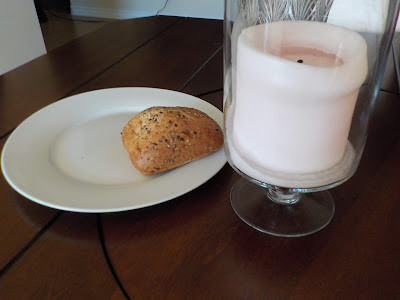
Small seeds for Beauty and Truth

The Prophet Jeremiah follows the instructions of God to show a vivid image of the consequences of letting the practice of faith be forgotten.
* [13:1–11] In this symbolic action, Jeremiah probably went to the village and spring of Parah, two and a half miles northeast of Anathoth, whose name closely resembled the Hebrew name of the river Euphrates (Perath), in order to dramatize the religious corruption of Judah at the hands of the Babylonians.
In the Gospel from Matthew, Jesus used parables centred around seemingly small and insignificant natural items to illustrate how the Kingdom of God grows.
* [13:31–33] See Mk 4:30–32; Lk 13:18–21. The parables of the mustard seed and the yeast illustrate the same point: the amazing contrast between the small beginnings of the kingdom and its marvelous expansion.
Jay Mack notes that God interprets the action of Jeremiah for us so we won’t miss the point. It is informative to think about where, today, we might be instructed to bury the loincloth.
The people got the message: Isra’el was the loincloth that God wanted to wear, but she wasn’t ready yet to be used for His purposes. She wanted to live an ordinary life first, so she wadded herself up and stuffed herself into the secure routines, separating herself from what God had at great cost purchased her for. But when the day comes it will turn out that she is good for nothing. The beautiful moral life that she set aside for a more convenient day will turn out, when she picks it up, to be mildewed and worthless
Edward Morse observes Faith and faithfulness can grow from small beginnings.  But doubt and rebellion may also get started from small things, too.
Lord, grant us the humility to pause our doings, to listen, and to seek your face.  Show us where we are fickle and resistant to your goodness. Help us to recognize that you have made us, and that we have been graced to receive the word of truth, even in living form, through your Son.  Amen.
Don Schwager’s meditation asks What can mustard seeds and leaven teach us about the kingdom of God? He quotes John Chrysostom (347-407 AD) that a small seed produces a great tree.
"Therefore he brought forward the similitude of this herb, which has a very strong resemblance to the kingdom of heaven. It indeed is 'the least of all seeds, but when it is grown, it is the greatest among herbs and becomes a tree, so that the birds of the air come and lodge in the branches thereof.' Thus he meant to set forth the most decisive sign of its greatness. 'Even so then shall it also be with respect to the gospel,' he says. For his disciples were weakest of all and least of all. Nevertheless, because of the great power that was in them, it has grown and been unfolded in every part of the world." (excerpt from the  THE GOSPEL OF MATTHEW, HOMILY 46.2)
The Word Among Us Meditation on Matthew 13:31-35 urges us to dig in and do it!
Praise your children, for even the smallest acts of obedience. Thank them even when they’re just doing what you asked. Tell them the things God thinks about them: they are wonderful, creative, strong, talented, and lovable. Yield to your spouse’s preference for something, even if it means eating tofu instead of T-bone steak. With heartfelt love, pick his socks or her towel up off the floor. Repent (quickly) for thoughtless words, and forgive even more quickly.
Friar Jude Winkler comments on the strong condemnation contained in the episode of the loincloth. Kingdom begins with small things the communities we do like smiling, prayer, and forgiveness. Friar Jude notes that parables are a way for people to understand. If teachers can’t explain it to a 5 yr old they haven't learned it.

Fr. Richard Rohr, OFM, asks why are so many people from different cultures, countries, ethnicities, educations, and religions are saying very similar things today? He comments that this really is quite amazing and to my knowledge has no precedent in human history.
As Rabbi Rami Shapiro explains it, “Perennial wisdom isn’t unique to any specific system of thought or belief, but rather a set of teachings common to all of them. Each articulation of perennial wisdom takes on the flavor of the system in which it rests. Mistaking the flavor for the substance leads us to imagine differences where none exist.” [2]
One way to summarize the essence of perennial wisdom (to paraphrase Aldous Huxley) is:
There is a Divine Reality underneath and inherent in the world of things;There is in the human soul a natural capacity, similarity, and longing for this Divine Reality;The final goal of existence is union with this Divine Reality. [3]
Our search to encounter the Kingdom of God in our daily experience is a direction toward celebrating and practicing beauty and truth.

References


(n.d.). CHAPTER 13 Judah's Corruption. 1The LORD said to me: Go buy .... Retrieved July 30, 2018, from http://www.usccb.org/bible/jeremiah/jeremiah13.htm

(n.d.). Matthew, chapter 13 - United States Conference of Catholic Bishops. Retrieved July 30, 2018, from http://www.usccb.org/bible/matthew/13

(n.d.). A Linen Loincloth Jeremiah's Fifth Symbolic Action. Retrieved July 30, 2018, from https://jaymack.net/english/jeremiah-commentary/Dx-A-Linen-Loincloth.php 

(n.d.). Creighton U Daily Reflections .... Retrieved July 30, 2018, from http://onlineministries.creighton.edu/CollaborativeMinistry/daily.html

(n.d.). Daily Scripture Readings and Meditations. Retrieved July 30, 2018, from http://dailyscripture.servantsoftheword.org/ 

(n.d.). 17th Sunday in Ordinary Time - Mass Readings and Catholic Daily .... Retrieved July 30, 2018, from https://wau.org/meditations/

(n.d.). Daily Meditations Archives - Center for Action and Contemplation. Retrieved July 30, 2018, from https://cac.org/category/daily-meditations/