Showing posts with label Falling Up. Show all posts

Thursday, April 4, 2019

Chutzpah and testimony

The texts from the Roman Catholic Lectionary today encourage our direct contact with God in a frank contemplation of the issues that may be inhibiting our wholehearted witness to the Love we experience in Christ.
Wholehearted witness

The Book of Exodus describes the chutzpah of Moses in communication with God while the Israelites worship the Golden Calf.
* [32:11–13] Moses uses three arguments to persuade the Lord to remain faithful to the Sinai covenant even though the people have broken it: (1) they are God’s own people, redeemed with God’s great power; (2) God’s reputation will suffer if they are destroyed; (3) the covenant with Abraham still stands. The Lord’s change of mind is a testimony to Israel’s belief in the power of intercessory prayer.1 
Psalm 106 exhorts us to praise the God whose mercy has always tempered judgment of Israel.
 * [Psalm 106] Israel is invited to praise the God whose mercy has always tempered judgment of Israel (Ps 106:1–3). The speaker, on behalf of all, seeks solidarity with the people, who can always count on God’s fidelity despite their sin (Ps 106:4–5). Confident of God’s mercy, the speaker invites national repentance (Ps 106:6) by reciting from Israel’s history… instances of sin, judgment, and forgiveness... the golden calf episode (Ps 106:19–23; see Ex 32–34), 2
In the Gospel from John, the Father is identified as Witness to Jesus even as we learn of the unbelief of Jesus’ hearers.
* [5:32] Another: likely the Father, who in four different ways gives testimony to Jesus, as indicated in the verse groupings Jn 5:33–34, 36, 37–38, 39–40.3 
Carol Zuegner observes that Moses asks God to relent from punishing those who have strayed, who didn’t listen to God and Moses. God does listen and relents. In the Gospel reading from John, Jesus seems exasperated that people don’t listen or if they do listen, they don’t hear. He tells of people searching the Scriptures to find eternal life, yet they don’t want to come to Jesus to have that life.
 Today’s readings made me realize that this lack of listening, or perhaps it is listening and not really hearing, also characterizes my relationship with God. I have instructions, suggestions and admonitions, but I often stray away from what I should do and who I should be. I don’t hear. I may listen to the Gospel, but I’m easily swayed by my own bullheadedness. I pray that I really hear God and that I listen with an open heart and a mind and a will that are open to God’s way, not just my way.4
Don Schwager asks “Do you believe that God's word has power to set you free from sin and ignorance and to transform you to be like him?” He cites Saint Augustine of Hippo (354-430 A.D.).
 "As Christians, our task is to make daily progress toward God. Our pilgrimage on earth is a school in which God is the only teacher, and it demands good students, not ones who play truant. In this school we learn something every day. We learn something from commandments, something from examples, and something from sacraments. These things are remedies for our wounds and materials for study."5
The Word Among Us Meditation on John 5:31-47 suggests that we all know that God wants to reveal himself to us through Scripture. But just like everything else in the Christian life, Scripture won’t just magically make sense to us. We need to cooperate with the Spirit, and that takes some time, attention, and perseverance.
 • Select a Scripture passage that you want to read. Maybe you will choose to follow the daily Mass readings with the meditations in this magazine.
• Don’t read right away, but begin with prayer. If you feel like singing or humming a hymn from Mass, do it.
• Next, read the Scripture passage you have chosen.
• Read it again slowly, dwelling on the words or phrases that struck you.
• Use your imagination to place yourself in the scene described in this passage.
• Imagine that Jesus is sitting across from you and telling you this story himself.
• Be still. During this quiet period, some words or pictures may bubble up in your thoughts. This may be God speaking to you—especially if the images and thoughts lead you closer to Christ, fill you with hope, or stir your heart to love and forgive.
• Try to write out what you think God is saying to you, and close with a prayer of praise and thanksgiving.
God wants to reveal himself to us in Scripture. Only by quiet reflection will we learn to hear his voice.6
Friar Jude Winkler comments that Moses intercedes with chutzpah with God for people who have been an albatross around Moses’ neck. The goal for ministry is for everything to go in a loving way. Friar Jude underlines the witness to Jesus of his works and the Father in the Gospel.


Fr. Richard Rohr, OFM, shares that all great spirituality is about letting go. Jesus’ life, death, and resurrection show us how to win by losing. In fact, this “Path of Descent” could be called the metanarrative of the Bible. It is so obvious, consistent, and constant that it’s hidden in plain sight. Christianity has overlooked this overwhelmingly obvious message by focusing on other things. Why did that happen? How is it that we were capable of missing what appears to be the major point? Fr Richard thinks it has to do with the Spirit patiently working in time and growing us historically. He thinks it has to do with human maturity and readiness. And he thinks it has a lot to do with the ego and its tactics of resistance. Author Philip Simmons (1957–2002) shared what it took to awaken him to this wisdom.
 Only when we accept our present condition can we set aside fear and discover the love and compassion that are our highest human endowments. And out of our compassion we deal justly with those about us. Not just on our good days, not just when it’s convenient, but everywhere and at all times we are free to act according to that which is highest in us. And in such action we find peace.7
The chutzpah of Moses is a letting go that puts everything on the line for the other. Our witness of winning by losing speaks of the transformation that we are invited to experience in our journey to fullness in life.

References

1
(n.d.). CHAPTER 32 The Golden Calf. 1When the people saw that Moses .... Retrieved April 4, 2019, from http://www.usccb.org/bible/exodus/exodus32.htm
2
(n.d.). Psalms, chapter 105 - usccb. Retrieved April 4, 2019, from http://www.usccb.org/bible/psalms/105
3
(n.d.). John, chapter 5 - usccb. Retrieved April 4, 2019, from http://www.usccb.org/bible/john5:56
4
(n.d.). Creighton U Daily Reflections - OnlineMinistries - Creighton University. Retrieved April 4, 2019, from http://onlineministries.creighton.edu/CollaborativeMinistry/daily.html
5
(n.d.). Daily Scripture Readings and Meditations. Retrieved April 4, 2019, from https://dailyscripture.servantsoftheword.org/
6
(n.d.). Meditations - The Word Among Us. Retrieved April 4, 2019, from https://wau.org/meditations/2019/04/04
7
(n.d.). Daily Meditations Archive: April 2019 - Daily Meditations Archives .... Retrieved April 4, 2019, from https://cac.org/category/daily-meditations/2019/04

Tuesday, March 19, 2019

Servant of the Promise

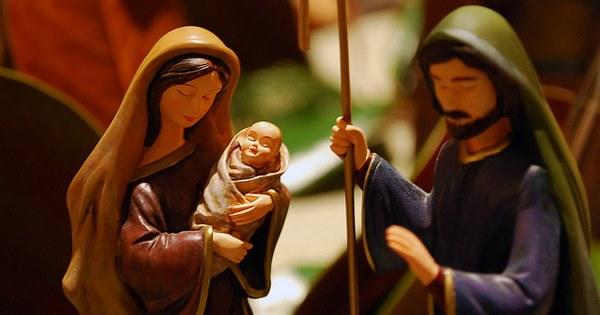
The texts from the Roman Catholic Lectionary today, the Solemnity of Saint Joseph, husband of the Blessed Virgin Mary, offer a look at the faith and righteousness associated with this head of the Holy Family.
Source: https://www.thinkingfaith.org/sites/default/files/styles/article_full_687/public/field/image/20141227_1HolyFamily.jpg?itok=7Mx2lZVD

The 2nd Book of Samuel establishes the line of David through the Oracle of Nathan.
* [7:8–16] The message Nathan delivers to David, called the Dynastic Oracle, is prompted by David’s intention to build a house (i.e., a temple) for the Lord, like David’s own house (i.e., palace) of cedar. David is told, in effect, not to bother building a house for the Lord; rather, the Lord will make a house for him—a dynasty, the House of David. Not only will he have descendants (v. 12) who will sit upon the throne of Israel (v. 13), their rule will last forever (vv. 13, 16); and even if they transgress the Lord’s commands, the line of David will never be removed from kingship as Saul was (cf. 1 Sm 13; 15). The oracle establishes the Davidic king as standing in relationship to the Lord as a son to a father (v. 14; cf. Ps 2:7; 89:27). The Dynastic Oracle, with cognate texts in the Scriptures, is the basis for Jewish expectations of an anointed king (1 Sm 12:3, 5), son of David (Mt 21:9); cf. Acts 2:30; Heb 1:5.1 
In Psalm 89 the Davidic king is the one to whom God promised kingship as enduring as the heavens.
* [Psalm 89] The community laments the defeat of the Davidic king, to whom God promised kingship as enduring as the heavens (Ps 89:2–5). The Psalm narrates how God became king of the divine beings (Ps 89:6–9) and how the Davidic king became king of earthly kings (Ps 89:20–38). Since the defeat of the king calls into question God’s promise, the community ardently prays God to be faithful to the original promise to David (Ps 89:39–52).2 
The Letter of Paul to the Romans exhorts us to understand our Inheritance through Faith in the example of Abraham.
* [4:1–25] This is an expanded treatment of the significance of Abraham’s faith, which Paul discusses in Gal 3:6–18; see notes there.3 
The Gospel from Matthew tells of the role of the dream of Joseph in the Birth of Jesus.
* [1:18–25] This first story of the infancy narrative spells out what is summarily indicated in Mt 1:16. The virginal conception of Jesus is the work of the Spirit of God. Joseph’s decision to divorce Mary is overcome by the heavenly command that he take her into his home and accept the child as his own. The natural genealogical line is broken but the promises to David are fulfilled; through Joseph’s adoption the child belongs to the family of David. Matthew sees the virginal conception as the fulfillment of Is 7:14.4 
Mariana Miller comments that Joseph had cultivated a deep relationship with God throughout his life and was open to receive God’s gift of being the person who would help educate Jesus, the Messiah.
In this relationship, Joseph was not in control and this was fine because he trusted the One in control. He knew the Law given by God to God’s people, he was faithful to it, yet he was open to God’s surprise. The law was not a god for Joseph, just a means to God. Only God was God. His heart was open. He trusted in God’s faithfulness and held on tight to the angel’s words: “Don’t be afraid.”5 
Anthony Towey wonders how the ‘greatest story ever told’ has acquired such a peaceful gloss, when in fact it is riddled with disturbance and uncertainty. We turn our gaze to two new parents and try to capture the faith, hope and love that sustained them in their turmoil.
 But Joseph doesn’t believe it. I once remarked to a female friend that Joseph was a really good chap for not handing Mary over to the authorities to be dealt with. ‘Typical bloke!’ was the reply. ‘Sooner believe an angel in a dream than his own fiancĂ©e in real life!’ We are told that Joseph was a bit older (this being perhaps an explanation for why he isn’t around at the time of the Passion). Age does not normally help us with romance, but it delights me that a sign of the spirit is that even old folk can still dream (Acts 2:17). Joseph, like his namesake in Genesis, is a gifted dreamer. Hope in the future enables us to change in the present, and both Joseph and Mary exemplify faith in believing what should not be possible. Addicted as we are to control, predictability and (so-called) rationality, this radical dependency is the lived divinity of the poor that is so anxiously avoided by the rich.6
Friar Jude Winkler provides background to the change from a charismatic choice of king for Israel and the establishment of the dynasty of David. Abraham is the father of all who have faith. Friar Jude finds that the action of Joseph defines righteousness for us as obedience and compassion.

Fr. Richard Rohr, OFM, points to a somewhat overlooked passage in the middle of Romans where Paul says, “The only thing that counts is not what human beings want or try to do [that’s the first half of life], but the mercy of God [that’s the second half of life]” (Romans 9:16). But we only realize this is true in the second half of life. We had to do the wanting and the trying and the achieving and the self-promoting and the accomplishing. The first half of life is all about some kind of performance principle. And it seems that it must be this way. We have to do it wrong before we know what right might be.
 But this wisdom only comes later, when we’ve learned to listen to the different voices that guide us in the second half of life.
These deeper voices will sound like risk, trust, surrender, uncommon sense, destiny, love. They will be the voices of an intimate stranger, a voice that’s from somewhere else, and yet it’s my deepest self at the same time. It’s the still, small voice that the prophet Elijah slowly but surely learned to hear (see 1 Kings 19:11-13).7
Our relationship with God, in contemplation, conversation, openness to intuition, prayer, and dream is our guide to the obedience and compassion that mark what right might be.

References

1
(n.d.). 2 Samuel, chapter 7 - usccb. Retrieved March 19, 2019, from http://www.usccb.org/bible/2samuel/7                     
2
(n.d.). scripture - usccb. Retrieved March 19, 2019, from https://www.usccb.org/bible/psalms/89:51            
3
(n.d.). Romans, chapter 4 - usccb. Retrieved March 19, 2019, from http://www.usccb.org/bible/romans/4
4
(n.d.). Matthew, chapter 1 - usccb. Retrieved March 19, 2019, from http://www.usccb.org/bible/matthew/1                  
5
(n.d.). Creighton U Daily Reflections .... Retrieved March 19, 2019, from http://onlineministries.creighton.edu/CollaborativeMinistry/daily.html  
6
(2014, December 26). Jesus: Who Do You Think You Are? 6. Mary and Joseph - Thinking Faith. Retrieved March 19, 2019, from https://www.thinkingfaith.org/articles/jesus-who-do-you-think-you-are-6-mary-and-joseph    
7
(n.d.). Daily Meditations Archive: March 2019 - Daily Meditations Archives .... Retrieved March 19, 2019, from https://cac.org/category/daily-meditations/2019/03/